

Reviewed · TOWNSHIP TOURS IN SWAKOPMUND
Swakopmund Best Cultural Historical Township Tours Namibia
Mondesa tells a different Swakopmund story. This four-hour private tour takes you beyond the town’s German buildings and coastal streets into Mondesa, a township created during Namibia’s Apartheid era. I like the personal guiding, with local figures such as Nande, Natal, and Antonia bringing history and daily life into focus. I also like the family meal, which turns a sightseeing stop into a real exchange.
The tour gives 25 percent of your payment back to the community, adding practical value to the $40 price. The main consideration is that this is not a light, polished city excursion. You will see homes, streets, and community projects in a place shaped by inequality, so you should arrive with respect and a willingness to listen.
In This Review
- Key points to know before you book
- Why Mondesa adds something important to Swakopmund
- The first look at Mondesa and its open market
- Meeting Namibia’s many cultures in one tour
- Community arts and craft projects
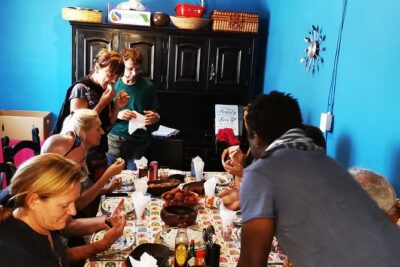
- The family home and traditional lunch
- What the guides add to the morning
- How the four hours feel in practice
- Is $40 a fair price?
- Who should book this Mondesa experience?
- My take: book it for context, not a checklist
- FAQ
- Where does the tour take place?
- How long does the experience last?
- How much does the tour cost?
- Is pickup available?
- Is this a private tour?
- What cultures and languages will I learn about?
- Is there a minimum number of people required?
Key points to know before you book
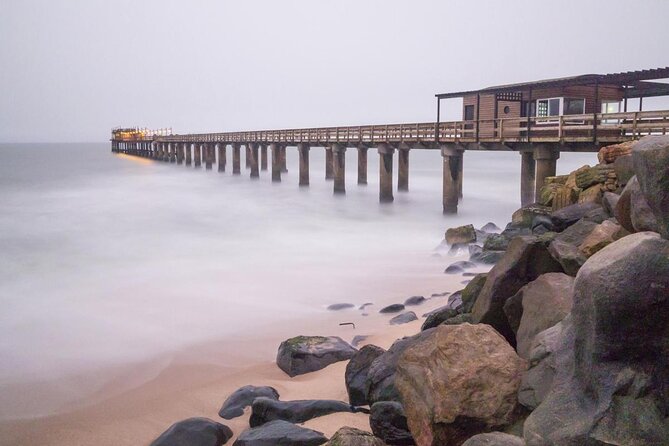
- Mondesa is the heart of the experience: You walk through a township formed during Apartheid and learn how that past still shapes life in Swakopmund.
- A local guide sets the tone: Guides including Nande, Natal, and Antonia have been praised for clear explanations and warm hosting.
- The home meal is more than lunch: A local family prepares food for your group, giving you a direct look at Namibian hospitality and cuisine.
- Several cultures appear in one morning: The tour introduces Ovambo, Damara, Herero, and Ovahimba traditions, along with language and food.
- You get to try a Damara click language: This is a playful but meaningful way to connect with one of Namibia’s distinctive languages.
- The tour is private: Only your group participates, which makes photographs, questions, and conversation less intrusive.
Why Mondesa adds something important to Swakopmund
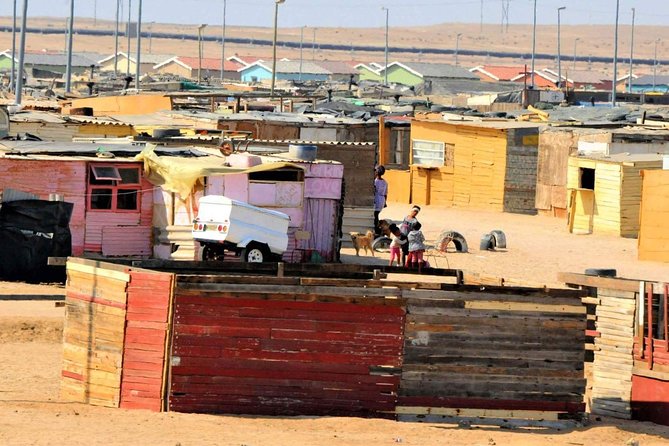
Swakopmund is often presented through its German colonial architecture, oceanfront setting, and tidy streets. Those are part of the town, but they do not explain the whole place. Mondesa offers another view, one tied to Namibia’s Apartheid period, when authorities established townships for Black Namibians.
That background matters because you are not simply visiting a neighborhood. You are seeing how political decisions affected where people lived and how communities developed. A local guide can connect the physical streets to Namibia’s wider story in a way that a standard sightseeing walk cannot.
I like the balance of the outing. You are not confined to a museum or a vehicle. You walk through Mondesa, visit an open market, see community arts and craft projects, and spend time in a family home. Each stop gives you a different kind of information.
The experience has also received recognition in responsible tourism. Explorer Tours was selected as a finalist for the 2018 African Responsible Tourism Awards and was named among the finalists for Best Responsible Cultural Experience in Africa. That does not guarantee a perfect visit, but the 25 percent community contribution gives the responsible-tourism claim a clear financial element.
More Township Tours in Swakopmund
- Swakopmund: Mondesa Township Day Tour Experience
★ 3.8 · 25 reviews - Explorer Historical Private Township Cultural Tours
★ 4.0 · 6 reviews - Explorer Private Cycling Township Tours
★ 3.9 · 5 reviews
The first look at Mondesa and its open market
The tour begins with an in-depth exploration of Mondesa and Swakopmund. Your local guide introduces the township’s streets, homes, and communities while explaining the history behind them.
One early stop is the open market. This is a useful place to get a sense of ordinary commerce and local routines rather than simply looking at monuments. Your guide can help explain what you are seeing and put the market into the wider context of Namibian life.
You are also invited to walk through the streets and take photographs of children and houses. This is the point where good manners matter most. Ask before photographing people, especially children, and follow your guide’s lead. A camera can easily make a community visit feel like a performance, while a respectful approach leaves room for conversation.
The private format helps here. You are not part of a large group moving through the neighborhood with cameras raised. You can stop to ask a question, listen to an explanation, or simply give people space.
Meeting Namibia’s many cultures in one tour
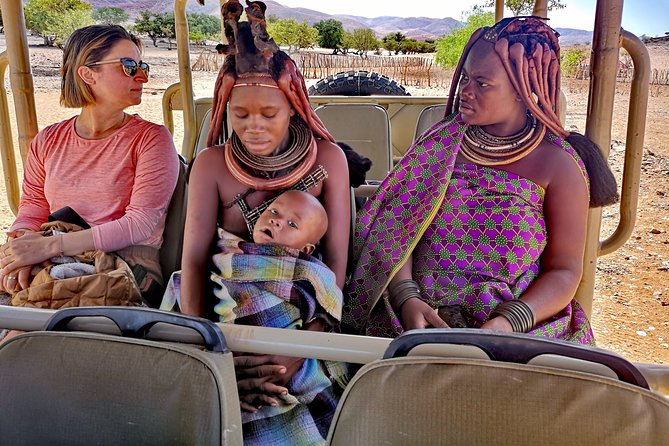
Namibia is home to several cultural groups, and this tour introduces you to the Ovambo, Damara, Herero, and Ovahimba people. The goal is not to reduce each group to a costume or a quick fact. Instead, the guide explains traditions, language, food, and the ways different communities form part of Namibia today.
The Herero and Himba cultural sections are a major reason to choose this experience. You will learn about their cultures as part of a broader Namibian story, rather than treating them as isolated attractions. The exact amount of time spent on each group can depend on the day and the flow of the visit, so you should think of this as an introduction rather than a full cultural study.
The Damara language lesson adds a memorable touch. You get to try its distinctive click sounds, which are difficult to produce at first and often bring some good-natured laughter. It is a small activity, but it changes the dynamic. You are not only hearing about language. You are attempting it yourself.
I would keep your expectations sensible. You will not become fluent in a few minutes, and the tour cannot explain every Namibian culture in detail. Its value is in giving you a grounded starting point and showing why Namibia cannot be understood through one culture alone.
Community arts and craft projects
The visit to community arts and craft projects gives the tour a creative side. You can see how local people use art and making as part of community work, and you may be taught more about the ideas behind the projects.
These stops also make the financial side of the tour easier to understand. Since 25 percent of your payment goes back to the community, your visit is connected to local benefit rather than being only an outside purchase. The supplied information does not specify exactly how the contribution is distributed, so you should not assume that every project receives a direct payment.
For you, the practical benefit is contact with projects that you would probably miss on your own. Swakopmund is easy to explore on foot in its central areas, but Mondesa requires more context and a local connection. The guide helps you find meaning in places that would otherwise be easy to pass without understanding.
A completely different kind of day:
- Walvis Bay: Marine Big 5 Luxury Catamaran Tour
★ 4.8 · 1,012 reviews - Swakopmund: Desert Dunes Quad Biking with Optional Sandboard
★ 4.9 · 590 reviews - Walvis Bay and Sandwich Harbour Tour
★ 4.8 · 483 reviews - Scenic Sandwich Harbour Tour
★ 5.0 · 277 reviews
The family home and traditional lunch

The most personal part of the outing is a visit to a local family home for a prepared meal. This is where the tour moves from observation to hospitality.
You can expect an introduction to local food and family life, followed by lunch. The meal is included in the $40 cost, so you are not paying extra for the central food experience. You should still approach the visit with care. A family home is not a staged restaurant, and the best response is to be polite, curious, and ready to accept the rhythm of the household.
This stop has been especially praised for showing language, customs, and traditions in a direct setting. One account described the home visits as an introduction to Namibian culture, while another emphasized the sense of community and caring. Those points explain why this part can stay with you longer than a quick market stop.
Food also gives you a way into culture without turning the tour into a lecture. You learn through taste, table manners, conversation, and the act of being welcomed. The exact menu is not specified, so do not book expecting a particular dish. Book it as a chance to try a home-cooked meal and learn about Namibian cuisine.
What the guides add to the morning
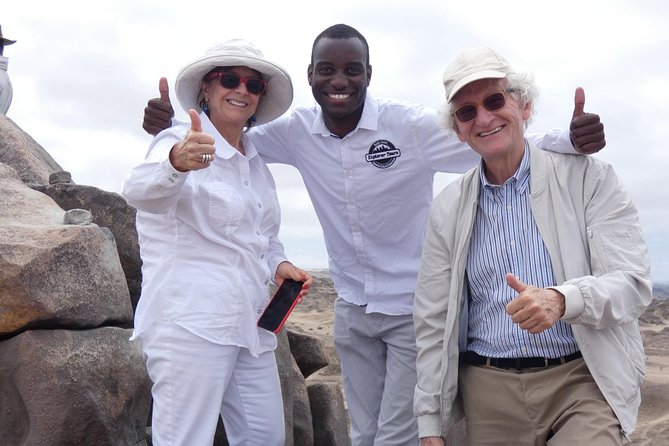
A local guide is essential for this experience. Without one, you could walk through Mondesa and see houses, children, roads, and market stalls without understanding the history or social setting.
Nande is identified as a guide who grew up in one of the townships and has been praised for explaining the area and its development. Natal is also named as a guide who made the visit informative, while Antonia is praised for her work with the group. The guide assigned to you may vary, but the company has several named guides connected with this experience.
That local connection is one of the tour’s strongest features. You are not getting a detached explanation delivered from a distance. You are hearing about Namibia from someone connected to the communities being discussed.
The experience has earned a 4.8 rating from eight published ratings, with praise focused on the clear information, organization, hospitality, and access to places you would not discover alone. That is a small sample, so I would treat it as encouraging rather than final proof. Still, the praise is consistent in the areas that matter most for a township visit.
How the four hours feel in practice

Four hours is a sensible length. It gives you enough time for the market, street walk, cultural explanations, community projects, language activity, and meal without turning the visit into a full-day commitment.
The pace should feel varied because you move between walking, listening, meeting people, and eating. A moderate level of physical fitness is required, so expect some walking through the township. The tour does not present itself as a demanding hike, but it is not a seated sightseeing ride either.
Pickup is offered, which makes the morning easier to arrange in Swakopmund. The experience is supplied with a mobile ticket, and confirmation is provided at booking. At least two people are required for a booking, so solo visitors should check availability before planning around it.
Because the tour is private, only your group participates. That is useful if you want to ask direct questions or take the visit at a thoughtful pace. It also reduces the risk of a large group overwhelming a family or community project.
Is $40 a fair price?

At $40 per person, this is not the cheapest way to spend four hours in Swakopmund. You are paying for private guiding, pickup, a market visit, cultural interpretation, community project visits, and lunch in a family home.
I consider the price fair if you value access and local connection. A normal walk around central Swakopmund can show you colonial buildings and streets, but it will not provide this level of contact with Mondesa or include a home meal. The 25 percent community contribution also gives the fee a purpose beyond transport and entertainment.
The value depends on how you travel. If you want independent sightseeing with complete freedom, the fixed four-hour format may feel restrictive. If you want help understanding Namibia and prefer a small private setting, the cost is easier to justify.
You should also remember that the tour is non-refundable and cannot be changed after booking. Since it needs at least two people, confirm your plans before paying. If the operator cancels because the minimum number is not met, you are offered another date or experience, or a full refund.
Who should book this Mondesa experience?
I would recommend this tour to you if you want history connected to present-day life. It suits people who ask questions, enjoy meeting local residents, and understand that a township visit requires sensitivity.
It is also a strong choice for first-time visitors to Namibia. Several cultural groups are introduced in one morning, and the guide helps you make sense of the country before you continue to other regions.
Families may appreciate the meal and language activity, though adults should guide children toward respectful behavior around homes and photography. Food-focused visitors will enjoy the chance to try a local meal, while photographers should treat the camera as secondary to the people and setting.
I would think twice if you want a polished attraction with a predictable script. This experience deals with real homes, real history, and a community shaped by difficult policies. It can be eye-opening, but it may also challenge your assumptions about Swakopmund.
My take: book it for context, not a checklist
I like this tour because it gives Swakopmund a fuller identity. The German colonial center is only one part of the town, and Mondesa helps you understand the people, cultures, and history beyond the postcard view.
Book it if the market, home meal, Damara language lesson, and local guiding appeal to you. Book it especially if you want your money to support a community connection through the 25 percent contribution.
Skip it if you prefer to stay in the central historic area or do not feel comfortable entering a township setting. For the right visitor, this is a thoughtful four-hour introduction to Namibia, with food and conversation doing as much work as the formal explanations.
FAQ
Where does the tour take place?
The tour takes place in Mondesa township and Swakopmund, Namibia. It includes visits to the township streets, an open market, community arts and craft projects, and a local family home.
How long does the experience last?
The tour lasts approximately four hours.
How much does the tour cost?
The listed price is $40 per person. Lunch is included.
Is pickup available?
Yes, pickup is offered.
Is this a private tour?
Yes. Only your group participates in the activity.
What cultures and languages will I learn about?
The tour introduces the Ovambo, Damara, Herero, and Ovahimba people. You will also learn about the Damara language and have a chance to try its distinctive click sounds.
Is there a minimum number of people required?
Yes. A minimum of two people per booking is required.
More History Tours in Swakopmund
- City Tour of Historical Swakopmund
★ 5.0 · 8 reviews - Half Day Swakopmund Cultural Historical Township Tour
★ 5.0 · 4 reviews - Cultural Tour in Swakopmund
★ 5.0 · 3 reviews - Half-Day Windhoek City and Township Cultural Tour
★ 4.5 · 187 reviews
Just added in Swakopmund
- Windhoek: Township Tour amongst the locals★ 4.0 · 1 review
- Walvis Bay Shore Excursion: Flamingos, Dune 7, Swakopmund★ 5.0 · 3 reviews
- Unforgettable Half Day Adventure, Explore Sandwich Harbour★ 5.0 · 3 reviews
- Swakopmund Township Home Cooking Experience★ 5.0 · 1 review
- Swakopmund Explorer Township Tour in Mondesa with Nande the Township Local Guide★ 5.0 · 4 reviews
- Walvisbay Dune 7 and Swakopmund Town Half Day Guided Tour★ 4.0 · 4 reviews
- Spitzkoppe – Day Tour to the Spitzkoppe Mountain from Swakopmund★ 5.0 · 3 reviews
- Sandwich Harbour 4×4 Guided Tour – Unforgettable Adventure★ 5.0 · 7 reviews
Township Tours in Swakopmund, compared.
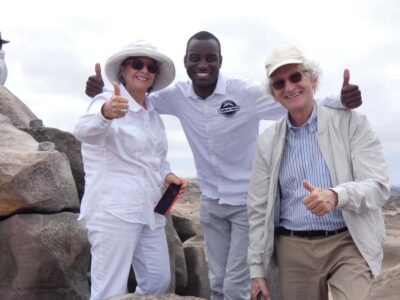

Explorer Historical Private Township Cultural Tours
Read our review →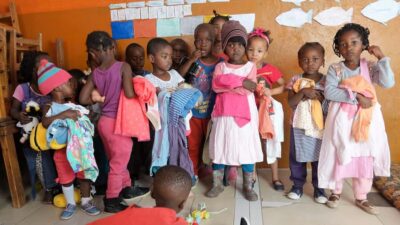

Half Day Swakopmund Cultural Historical Township Tour
Read our review →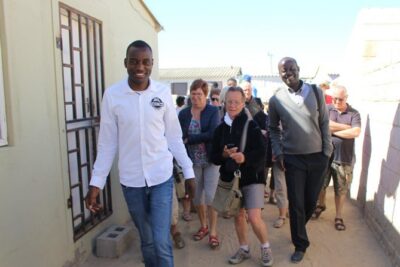
Swakopmund Explorer Township Tour in Mondesa with Nande the Township Local Guide
Read our review →
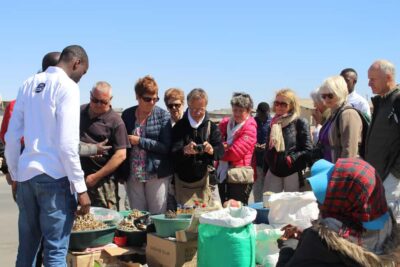
Browse the lists this tour appears in