
Reviewed · HISTORICAL TOURS
Cultural Tour in Swakopmund
Culture is best met face to face. This three-hour tour takes you beyond central Swakopmund into townships and communities, with stops focused on Namibia’s different tribes, daily life, religion, education, and local food. I like the small maximum of six people, which should make questions and conversation easier. I also like the range of stops, especially the Herero cultural visit and the chance to meet children at a pre-primary school. The main consideration is that the school and informal settlement visits require sensitivity, respect, and an open mind.
At $105.48 per person, this is not a cheap sightseeing drive, but it offers far more than a quick look from a vehicle. You get a local introduction to several communities, a market walk, cultural explanations, and an optional food tasting in about three hours. The schedule is fairly full, so you should expect short visits rather than long, private conversations at every stop.
In This Review
- Key points to know before booking
- Leaving central Swakopmund for a wider view
- The open market gives the tour a practical start
- Meeting a Herero woman and hearing about belief
- The pre-primary school and kindergarten visit
- Seeing DRC and an informal settlement
- A traditional herbalist adds another point of view
- A short visit with the Damaranama tribe
- Ending with an optional taste of local food
- What $105.48 represents in practical value
- Guides, timing, and the best fit
- Should you book the Cultural Tour in Swakopmund?
- FAQ
- How long does the Cultural Tour in Swakopmund last?
- How many people can join the tour?
- Is pickup available?
- What communities and cultural subjects are included?
- Can I interact with children during the tour?
- Can I cancel for a full refund?
Key points to know before booking
- Small-group setting: The tour accepts no more than six participants, a useful size for asking questions and keeping the outing personal.
- Several cultures in one morning: You learn about different Namibian tribes, including Herero and Damara communities.
- The Herero stop adds personal context: A Herero woman explains her culture and religion directly.
- A school visit is the emotional high point: You can interact with children at a pre-primary school and kindergarten.
- The tour reaches beyond the centre: The route includes DRC, an informal settlement, as well as township areas and an open market.
- Local food is optional: The final tasting gives you a chance to try local dishes without making it compulsory.
Leaving central Swakopmund for a wider view
The experience begins with a short drive through the centre of Swakopmund before heading toward township areas. That change matters. Swakopmund’s central streets offer a familiar visitor setting, while this tour is designed to show you parts of town that most quick sightseeing stops do not cover.
You are not simply looking at buildings or taking photographs from a van. The guide explains Namibian culture and the different tribes connected to the area. Since the tour is limited to six people, you should have a better chance to ask about what you see instead of listening to a fixed speech from the back of a large bus.
The small size is also useful in residential areas and at community visits. It can make the outing feel less like a procession. Still, you should remember that these are lived-in places, not open-air exhibits. Listen carefully, ask polite questions, and follow the guide’s lead about photographs and personal interaction.
The tour lasts about three hours, so the pace is brisk. You will cover several subjects in a short time. That is a strength if you want an introduction to Swakopmund’s cultural mix, but it may feel too quick if you prefer to spend an hour at one community or museum.
More History Tours in Swakopmund:
- City Tour of Historical Swakopmund
★ 5.0 · 8 reviews - Swakopmund Best Cultural Historical Township Tours Namibia
★ 5.0 · 8 reviews - Explorer Historical Private Township Cultural Tours
★ 4.0 · 6 reviews
The open market gives the tour a practical start
One of the early stops includes a short walk through an open market. This is a useful addition because it puts culture into everyday practice. Markets show how people sell, buy, talk, and present local products. Even a brief walk can help you connect the guide’s explanation of tribes and traditions with ordinary life.
Do not expect a long shopping session based on the information available. The market is one part of a wider route, not the main purpose of the tour. I would treat it as a chance to look around, ask questions, and get a sense of the local setting rather than plan your entire souvenir shopping around it.
The stop also helps break up the drive. You move from listening in the vehicle to walking among stalls and people. That variety is important on a short tour, especially when the rest of the program includes several seated or guided visits.
Meeting a Herero woman and hearing about belief
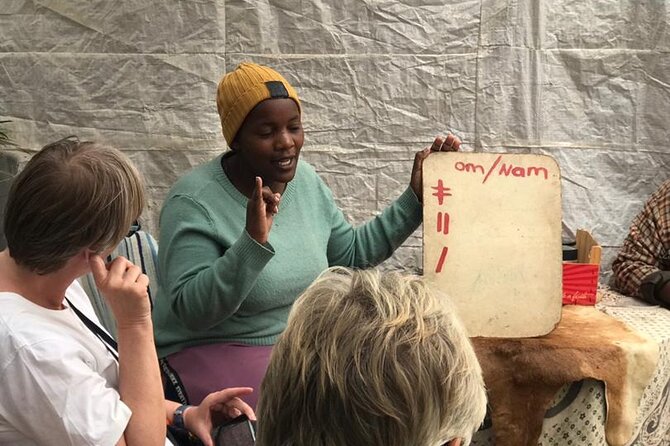
The Herero visit is one of the most distinctive parts of the experience. At this stop, a Herero woman explains her culture and religion. That direct conversation gives the tour a human focus that a general overview cannot provide.
The value here is not just seeing traditional clothing or hearing a label attached to a group. You have the chance to learn from someone explaining her own cultural background. The religious element is also useful because it broadens the visit beyond food, clothing, and surface customs.
The supplied details do not specify how long this stop lasts or exactly what will be demonstrated. You should therefore approach it as an explanation and conversation, not expect a formal performance. If you are curious about family traditions, faith, clothing, or community life, this is a good point to ask respectful questions.
The visit also shows why the six-person limit matters. A small group is more likely to allow a natural exchange, while a large group can turn a personal presentation into a lecture. That said, the quality of the conversation can depend on timing and on how willing the group is to listen.
The pre-primary school and kindergarten visit
The school visit is likely to be the most memorable stop for many people. You visit a pre-primary school and kindergarten, where you can interact with the children. A previous booking described the children as happy to see the group, and named the kindergarten as the highlight of the day.
That reaction makes sense. Children bring immediate energy to a cultural outing, and a short exchange can feel more personal than a standard monument stop. You may find this part especially touching if you enjoy meeting local people rather than only viewing places.
Still, school visits call for care. You are entering a setting where children are learning and playing, so your role should be respectful and guided by the tour leaders. Do not assume that every child wants to be photographed or handled. Follow the instructions from the guides and school staff.
The information does not state whether donations, supplies, or gifts are expected, so do not assume you need to bring anything. The safest approach is to arrive with a friendly attitude and let the guides explain how interaction works.
For families, this may be the most appealing section of the route. For some adults, it may also be the part that raises the most questions about responsible tourism. The best version of this visit is one that supports normal school activity rather than treating the children as entertainment.
More things to do in Swakopmund:
- Walvis Bay: Marine Big 5 Luxury Catamaran Tour
★ 4.8 · 1,012 reviews - Swakopmund: Desert Dunes Quad Biking with Optional Sandboard
★ 4.9 · 590 reviews - Walvis Bay and Sandwich Harbour Tour
★ 4.8 · 483 reviews - Scenic Sandwich Harbour Tour
★ 5.0 · 277 reviews
Seeing DRC and an informal settlement
The route then continues to DRC, described as an informal settlement. This is a more serious stop than the market or school. It gives you a chance to see a part of Swakopmund that is often left out of a standard town tour.
An informal settlement visit can add useful context to what you learn about Namibia’s communities and living conditions. It may help you understand that the polished centre of Swakopmund is only one part of the town. The contrast can be educational, but it can also feel uncomfortable.
That discomfort is not a reason to avoid the stop, but it is a reason to behave thoughtfully. You are visiting someone’s home area, not a set built for sightseeing. Keep your attention on the guide’s explanations, avoid intrusive photographs, and remember that people living there are not attractions.
The tour description does not provide specific details about services, housing, or community projects in DRC. I would not book this section expecting a detailed development presentation. Instead, see it as a short, guided introduction to an area that gives social context to the wider cultural tour.
A traditional herbalist adds another point of view
The visit to a traditional herbalist brings health and local knowledge into the program. It gives you a look at a form of practice that sits outside the usual museum explanation of culture.
The term traditional herbalist can cover many types of knowledge and treatment, but the supplied information does not say which remedies or methods will be shown. Keep your expectations flexible. You may receive an explanation rather than a demonstration, and the length of the visit is not specified.
This stop fits well with the Herero discussion and the visit to the Damaranama community because it shows culture as something used in daily life. Religion, health, food, family, and community identity are not separate boxes. A short tour cannot explain all of those subjects in depth, but this stop widens the picture.
If you have medical concerns, do not treat anything discussed here as a substitute for professional medical advice. The value of the stop is cultural understanding, not medical treatment.
A short visit with the Damaranama tribe
The program includes a stop with the Damaranama tribe. The details do not state exactly what takes place there, so you should expect a brief cultural encounter rather than a precisely defined activity.
Even so, the stop is important because the tour is built around comparison. You are not hearing about only one group and then leaving with the impression that one tradition represents all of Namibia. The Herero presentation and Damaranama visit give the day more than one cultural reference point.
This is where the guide’s explanations matter most. Names, traditions, religion, and community life can be difficult to understand in a short visit, especially if you are new to Namibia. Listen for how the groups are described, and ask for clarification when a term or custom is unfamiliar.
The tour’s strength is its breadth. Its limitation is the same thing. Several stops mean you get a broad introduction, but not a long study of any one tribe.
Ending with an optional taste of local food
The final part of the experience is a taste of local foods, listed as optional. This gives you a chance to finish with something practical and memorable. Food can make cultural information easier to recall, since you connect what you have heard with a direct sensory experience.
Because the tasting is optional, you can decide based on your comfort and appetite. The available details do not name the dishes, describe ingredients, or explain whether the tasting carries an extra charge. Ask the guide before you commit if you have allergies, dietary restrictions, or strong preferences.
I like that this is not presented as compulsory. Some people want to try everything; others may prefer to finish with conversation. The choice keeps the activity flexible, particularly for anyone who has already eaten or feels cautious about unfamiliar foods.
The tasting also gives the tour a natural closing point. After hearing about tribes, religion, school life, settlements, and herbal practice, food provides a simple way to bring the discussion back to everyday living.
What $105.48 represents in practical value
At $105.48 per person, the cost is high for a three-hour outing if you judge it only by driving time. You are not paying for a long-distance journey or a major admission attraction. You are paying for a guided route, cultural introductions, community visits, and the convenience of pickup.
The value improves if you want a structured introduction to Swakopmund and do not want to arrange separate visits yourself. The small group of no more than six is another factor in the price. A private or semi-private feel can be worth more than a cheaper large coach tour, especially when the subject depends on questions and personal explanation.
Pickup is offered, which may be especially useful if you are arriving by cruise ship or have limited time in town. One booking had pickup from the port and needed flexibility because of cruise ship delays. That suggests the provider can adjust to some transport problems, though you should still communicate your schedule clearly before the tour.
Group discounts are available, but the details are not provided. Ask how the discount works before booking if you are traveling with a larger party. The experience itself has a maximum of six people, so a larger group may need more than one departure or separate arrangements.
Guides, timing, and the best fit
Nanette and Mercia received especially warm praise for their guiding and communication. That is valuable here because the tour depends heavily on how clearly the guides explain cultural differences and how respectfully they manage community visits.
You should allow about three hours and expect a compact schedule. The route includes a vehicle portion, a market walk, several community stops, a school visit, and optional food. Wear something comfortable for moving between stops, though the supplied information does not specify any special clothing or equipment.
I think this experience suits you best if you want:
- A short cultural introduction while staying in Swakopmund
- Direct explanations about several Namibian tribes
- A small group instead of a large coach
- Community visits that go beyond central sightseeing
- A tour that can work with port pickup
- A flexible final food tasting
It may not suit you if you want a slow, highly detailed academic study of one community. It may also be uncomfortable if you prefer sightseeing that avoids poverty, schools, or residential areas.
Confirmation is provided when you book, and most people can participate. The tour requires good weather and a minimum number of participants. If bad weather or insufficient bookings cancel the outing, you are offered another date or a full refund.
Should you book the Cultural Tour in Swakopmund?
I would book this tour if you have only a short time in Swakopmund and want personal contact with local communities rather than another standard town drive. The strongest reasons are the small group, the Herero cultural explanation, the school visit, and the range of subjects covered in three hours.
I would pause if you are uncomfortable with informal settlement or school visits, or if $105.48 feels too high for a short activity. Ask about the food tasting, photography, pickup timing, and the exact length of each stop before paying.
For cruise passengers, families, and curious first-time visitors to Swakopmund, this is a useful introduction. It will not explain every part of Namibian culture, but it can give you a more human view of the town than a quick look around the centre.
FAQ
How long does the Cultural Tour in Swakopmund last?
The tour lasts approximately three hours.
How many people can join the tour?
The maximum group size is six participants.
Is pickup available?
Yes. Pickup is offered, including an example of pickup from a port.
What communities and cultural subjects are included?
The tour covers different Namibian tribes and includes visits connected with Herero culture, the Damaranama tribe, a traditional herbalist, and DRC, an informal settlement.
Can I interact with children during the tour?
Yes. The program includes a visit to a pre-primary school and kindergarten where participants can interact with the children.
Can I cancel for a full refund?
Yes, if you cancel at least 24 hours before the experience start time. Cancellations made less than 24 hours in advance are not refunded.
Just added in Swakopmund
- Windhoek: Township Tour amongst the locals★ 4.0 · 1 review
- Walvis Bay Shore Excursion: Flamingos, Dune 7, Swakopmund★ 5.0 · 3 reviews
- Unforgettable Half Day Adventure, Explore Sandwich Harbour★ 5.0 · 3 reviews
- Swakopmund Township Home Cooking Experience★ 5.0 · 1 review
- Swakopmund Explorer Township Tour in Mondesa with Nande the Township Local Guide★ 5.0 · 4 reviews
- Walvisbay Dune 7 and Swakopmund Town Half Day Guided Tour★ 4.0 · 4 reviews
- Spitzkoppe – Day Tour to the Spitzkoppe Mountain from Swakopmund★ 5.0 · 3 reviews
- Sandwich Harbour 4×4 Guided Tour – Unforgettable Adventure★ 5.0 · 7 reviews
Historical Tours, compared.

Half-Day Windhoek City and Township Cultural Tour
Read our review →

Swakopmund Best Cultural Historical Township Tours Namibia
Read our review →

Explorer Historical Private Township Cultural Tours
Read our review →
Half Day Swakopmund Cultural Historical Township Tour
Read our review →Browse the lists this tour appears in