
Reviewed · CITY TOURS
City Tour of Historical Swakopmund
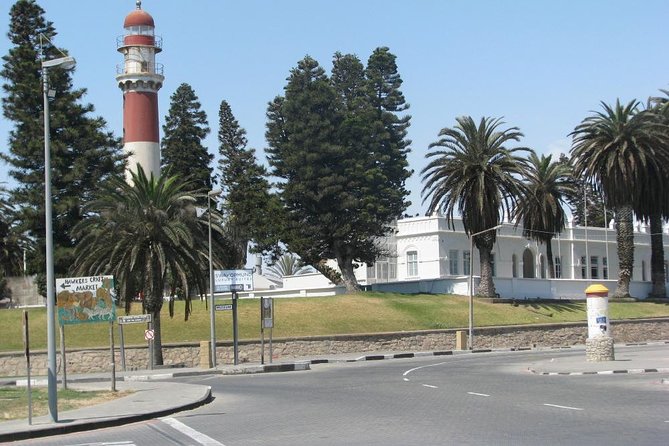
Swakopmund wears its past in plain sight. This two-hour tour makes sense of the town’s German colonial buildings, old harbor works, and early military life, with guide Hans-Dieter Göthje adding local stories and useful context. I like the small group limit of 25, which should make questions easier, and I love the way the route links impressive buildings to the people and institutions behind them. The main consideration is that much of the appeal is architectural and historical, so anyone seeking adventure or dramatic scenery may find the pace quiet.
You begin at the Swakopmund Museum and return there at the end, making this an easy first activity in town. At $37.16 per person, it is a fair price for a personal introduction, though the advertised visit lasts only about two hours and most stops are viewed from outside or without a separate admission charge.
In This Review
- Key points about this Swakopmund history tour
- Why Swakopmund makes a good walking tour
- Starting at the museum and old harbor
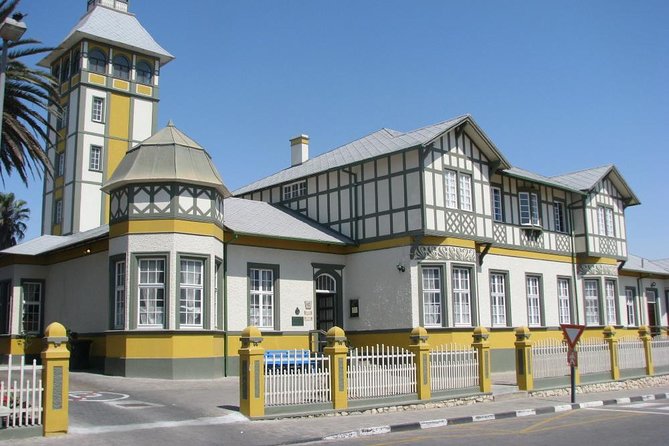
- Woermannhaus and the business of colonial Swakopmund
- Prinzessin-Rupprecht-Heim and the changing purpose of a building
- Haus Hohenzollern and the theatrical side of German design
- The Lutheran church and a story about faith in a young town
- The Marine Memorial and the difficult colonial record
- What the guide adds to the buildings
- Price, group size, timing, and practical value
- Who should book this two-hour experience?
- Should you book the City Tour of Historical Swakopmund?
- FAQ
- Where does the City Tour of Historical Swakopmund start?
- Where does the tour end?
- How long does the tour last?
- Is pickup available?
- How many people can join the tour?
- Is the tour suitable for most people?
- What is the cancellation policy?
Key points about this Swakopmund history tour
- Woermannhaus reveals the town’s trading roots, including its old Damara and Namaqua Trading Company offices and lookout tower.
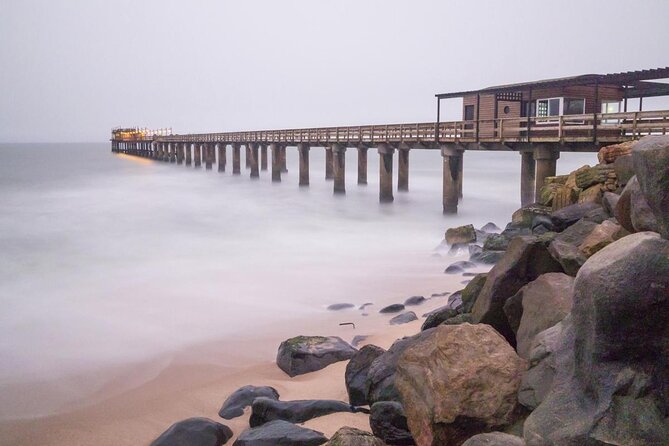
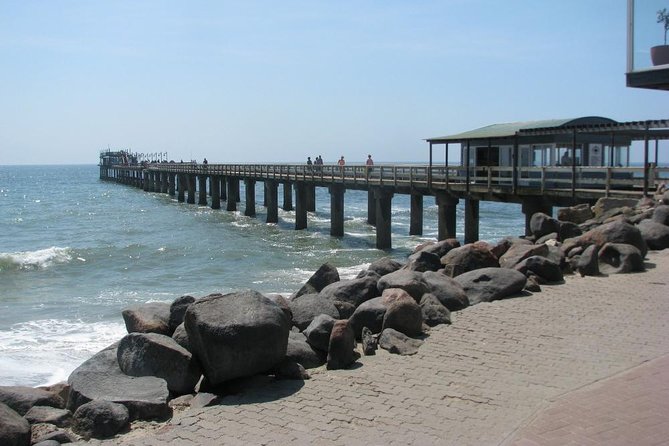
- The 262-meter iron jetty tells a harbor story, including an unfinished German construction project interrupted by the First World War.
- Hans-Dieter Göthje brings local perspective, with lifelong ties to Swakopmund and family connections to German settlers.
- The route covers more than one grand building, moving from commerce and military care to religion, imperial decoration, and memorial sculpture.
- Pickup may be offered, while the listed meeting point is Swakopmund Museum on Strand Street.
- Free cancellation is available up to 24 hours before departure, subject to the stated minimum group requirement.
Why Swakopmund makes a good walking tour
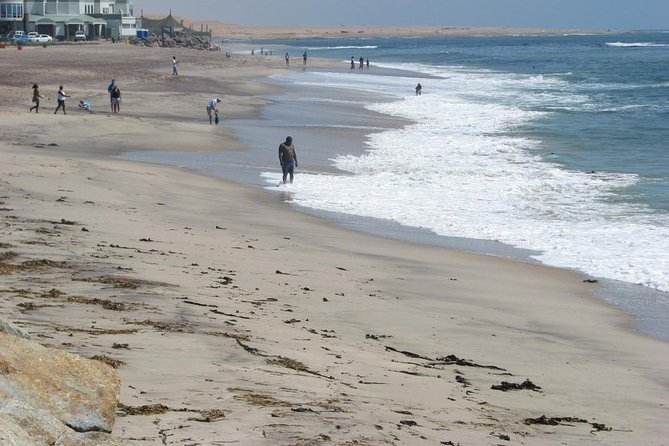
Swakopmund can feel slightly surprising at first. Its German colonial architecture, broad streets, and seaside setting create a town unlike most places in Namibia. The contrast is part of the interest, but without explanation, you may simply see a collection of ornate old buildings and wonder why they are here.
This tour supplies that missing thread. Swakopmund was founded in August 1892 by the German Colonial Reich and served for many years as the territory’s main harbor. The mole and jetty helped connect the settlement to shipping, trade, administration, and military activity. Both harbor structures still exist, although the jetty is the more immediate sight on this route.
I like this approach because it keeps the story local. Instead of treating Swakopmund as a decorative seaside resort, the tour explains how commerce, German government, hospitals, churches, and military memorials shaped the town.
The architecture also becomes easier to read. Timber details, towers, pediments, statues, and church design are not just pretty decoration. They point to the ambitions of a colonial settlement trying to reproduce familiar European institutions in a difficult desert environment.
The tour is listed as a walking experience, but one account of the outing describes a combination of walking and driving that covered more parts of town. That suggests the exact flow can vary. Ask about the pickup and route when booking if you want to know how much time will be spent on foot.
More City Tours in Swakopmund:
- swakopmund city tour dune 7 pink lake pink flamingos
★ 3.8 · 39 reviews - Windhoek: City and Township Tour
★ 4.8 · 430 reviews - Half-Day Windhoek City and Township Cultural Tour
★ 4.5 · 187 reviews
Starting at the museum and old harbor
The meeting point is the Swakopmund Museum at 8GFF+Q62, Strand Street. This is a practical place to begin because the museum sits close to the central historic area and the coast. Pickup is offered, and the experience ends back at the meeting point.
The harbor story gives the tour a useful opening. Swakopmund’s early importance depended on access to the Atlantic, yet the coast was not an easy working harbor. The town’s mole and jetty were built to improve that connection.
The jetty stop lasts about 15 minutes. That is enough time to see the iron structure, hear why it was built, and understand the engineering problems faced during construction. A wooden jetty had become derelict, so a replacement was planned in 1912 by two firms from Mannheim, Germany.
The original plan called for a jetty 640 meters long. Rocky ground created such serious trouble that the builders had to develop a drilling program. Then the First World War began, leaving the project incomplete at 262 meters.
That unfinished quality is part of the story. This is not simply an old pier for photographs. It shows how German plans for Swakopmund collided with difficult ground, hard ocean conditions, and world events. The jetty endured more than 70 years of Atlantic pounding with little or no repair, a detail that gives the structure real force even if your visit is brief.
You should not expect a long harbor walk from the schedule. The jetty stop is short, and the main value comes from the explanation rather than from a large number of activities.
Woermannhaus and the business of colonial Swakopmund
The longest listed stop is Woermannhaus, with about 30 minutes in Bismarck Street. That extra time is justified. This is one of the clearest places to understand how trade helped establish Swakopmund.
Architect Friedrich Höft designed the building in the Fachwerkbau style, a form associated with timber-framed German construction. The original building went up in 1894 for the Damara and Namaqua Trading Company. Extensions followed in 1903 and 1904, including wood-paneled offices.
The company later became known as Woermann, Brock & Co, and its headquarters occupied an important place in what was then South West Africa. Selected officials and employees also lived in the building in 1909. That mixture of office and residence gives you a better sense of how compact early colonial administration could be.
Look for the Damara Tower at the northwest corner. It served as a lookout, flag mast, and navigation point. A building feature that might seem ornamental suddenly becomes part of the harbor and trading system.
The old courtyard once held an evergreen garden. That small detail is worth hearing in a town shaped by desert conditions. It hints at the effort required to create a familiar European setting in Namibia.
Admission is listed as free. The route may not offer an extended interior visit, so you should think of Woermannhaus as an architectural and storytelling stop, not a museum tour with many rooms open to explore.
Prinzessin-Rupprecht-Heim and the changing purpose of a building
The Prinzessin-Rupprecht-Heim takes about 20 minutes. Its name comes from the patroness of the Bavarian Association, Princess Rupprecht, wife of the heir to the Bavarian throne.
The building was constructed in 1902 as a military hospital and occupied that same year. The hospital closed in 1909, and the building became a convalescent home in 1911. Two years later, the Bavarian Women’s Association of the Red Cross took it over and arranged major renovations funded by a donation of 35,000 mark.
This is one of the more useful stops because the building’s story keeps changing. It shows how a town’s needs developed over time. Military care, recovery, charity, and women’s associations all left their mark on the same place.
The stop is described as seeing the building rather than entering it. That distinction matters if you want interiors. Still, the changing use gives the guide a chance to explain daily life in the early years, not just dates and architectural labels.
More History Tours in Swakopmund:
- Swakopmund Best Cultural Historical Township Tours Namibia
★ 5.0 · 8 reviews - Explorer Historical Private Township Cultural Tours
★ 4.0 · 6 reviews - Half Day Swakopmund Cultural Historical Township Tour
★ 5.0 · 4 reviews - Cultural Tour in Swakopmund
★ 5.0 · 3 reviews
Haus Hohenzollern and the theatrical side of German design
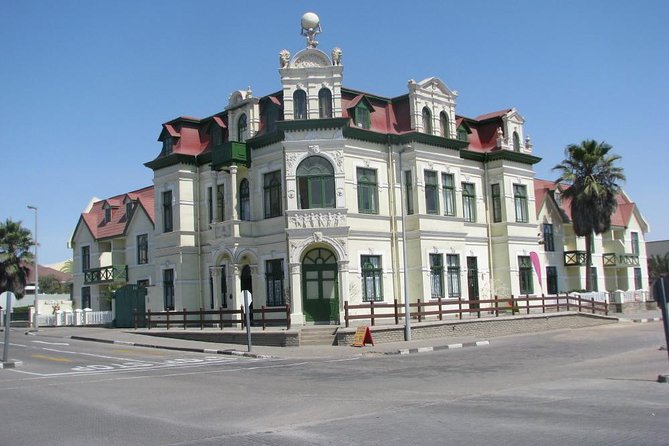
Haus Hohenzollern was built between 1904 and 1906 and takes about 15 minutes to see. It was once a hotel and is among the most elaborate buildings on the route.
Look for the cupid and flower decorations, the corner pediment edged with two lions, and the imperial image of Atlas holding the world on his shoulders. The building rises above its neighbors and makes a bold statement about status and power.
I find this stop helpful as a counterpoint to Woermannhaus. Woermannhaus reflects trade and practical administration. Haus Hohenzollern is more theatrical, with decoration designed to impress.
The desert setting makes the construction seem even more ambitious. The early builders were working far from Germany, yet they produced buildings with a distinctly European visual language. The guide can help you see how these details relate to the politics and social aspirations of the period.
The drawback is that 15 minutes is a short window. You will likely get the main exterior features and their story, but not a long examination of every carving or architectural detail.
The Lutheran church and a story about faith in a young town
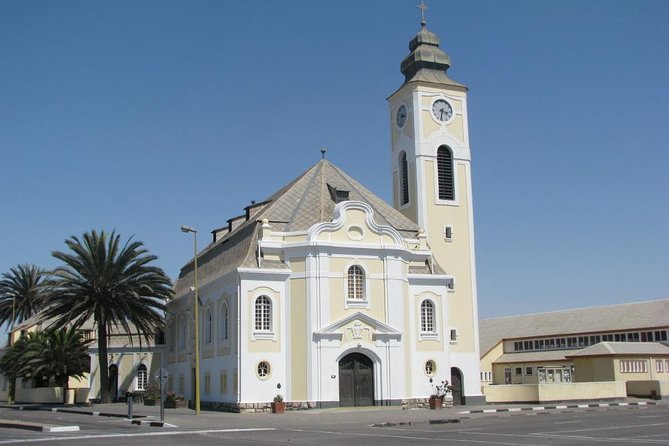
The German Evangelical Lutheran Church is scheduled for about 20 minutes. The church and adjacent parsonage reflect the growth of a settled German-speaking community.
One local story tells of Pastor Vedder attempting an open-air service in 1905 and finding nobody there. He reportedly returned to his home, a wooden crate without a roof, doors, or windows, with his sermon still unread. The story is amusing, but it also points to how unfinished and uncertain the settlement could be.
By 1909, the congregation was ready to plan a permanent church. Architect Ertl designed the building in an artistic Neo-Baroque style, and F. H. Schmidt received the construction contract in 1910 for 85,000 mark. Franz Schilling of Apolda, Germany, cast the three church bells.
This stop adds a human scale to the town’s development. You move from temporary shelter and open-air worship to a formal church with a planned design, contracted construction, and imported bells.
Again, the schedule says visit rather than a guaranteed interior tour. If entering the church matters to you, confirm the arrangements before departure. The exterior and the story still make this one of the route’s strongest stops.
The Marine Memorial and the difficult colonial record
The final listed stop is the Marine Memorial, with about 20 minutes. The monument honors members of Germany’s First Marine Expedition who were killed in action.
Its central image shows a standing marine beside a fallen comrade. Berlin sculptor A. M. Wolff designed the statue, and Gladenbeck A. G. in Berlin cast it. The crew of the gunboat Panther presented the monument to Swakopmund on July 26, 1908, on behalf of the Marine Infantry.
The National Monuments Commission declared it a national monument on January 2, 1969. Those dates help place the memorial in both its original colonial setting and its later preservation as part of the town’s built heritage.
This is an important place to slow down and listen. Monuments do not only preserve the values of the people who built them. They also raise questions about whose stories were honored and how colonial history is remembered today.
The supplied details focus on the German military purpose of the monument. You should not expect the short tour to provide a full account of every period of Namibian history. If you want wider context about colonial rule and its effects, this tour is a starting point rather than the entire discussion.
What the guide adds to the buildings
The best reason to choose a guided walk instead of following a map is the human explanation. Hans is praised for clear historical detail, and Hans-Dieter Göthje is described as having lifelong ties to the area, with grandparents who migrated from Germany.
That background can add a personal layer to the tour. You hear not only when a building was completed, but how Swakopmund’s German connections continued through families and local life. The strongest parts of the experience are likely to come when the guide links one building to another and explains how trade, church life, military care, and civic identity fit together.
The guide has also been described as prompt and able to explain the history of Swakopmund and South West Africa in a clear way. That matters because the subject can become confusing quickly. Names changed, buildings changed purpose, and the town’s colonial story connects to wider Namibian history.
I would use the tour as a way to get your bearings early in a stay. Afterward, you will recognize the major buildings and can return to the ones that interest you most.
Price, group size, timing, and practical value
At $37.16 per person, this is not the cheapest way to spend two hours, but it is a reasonable price for a guided introduction with a named local guide, pickup offered, and a maximum of 25 people.
Most stops have no separate admission charge. You are paying mainly for the guide’s time, interpretation, and route planning. That makes the value depend on your interest in history. If you would otherwise walk past these buildings without understanding them, the fee can be worthwhile.
The tour is booked an average of 36 days ahead, so you should reserve early if your dates are fixed. Confirmation is received at booking, and a mobile ticket is provided.
Most people can participate, and the meeting point is near public transportation. The information does not provide a detailed accessibility assessment, so ask the operator about walking surfaces, vehicle use, and any mobility needs before booking.
The tour requires a minimum number of participants. If that minimum is not reached and the activity is canceled, you are offered another date or experience, or a full refund. You can cancel for a full refund up to 24 hours before the local start time. Changes or cancellations inside that window are not accepted for a refund.
Who should book this two-hour experience?
I would recommend it to anyone arriving in Swakopmund who wants context before exploring alone. It suits you especially well if you enjoy architecture, local stories, colonial-era buildings, and short guided walks with several distinct stops.
It also works for people who prefer a calm introduction rather than a packed sightseeing schedule. The route is compact, and the free-admission stops keep the focus on interpretation.
You may want a different activity if you are looking for wildlife, desert sports, long coastal views, or a full-day outing. This is a town-history experience. Its rewards come from details, not speed or spectacle.
Should you book the City Tour of Historical Swakopmund?
Book it if you want Swakopmund’s buildings to make sense. Woermannhaus, the jetty, Prinzessin-Rupprecht-Heim, Haus Hohenzollern, the Lutheran church, and the Marine Memorial each reveal a different part of the town’s early life.
I especially like it as a first-day activity. The two-hour format leaves plenty of time for other plans, while the guide’s local knowledge can help you decide where to spend more time afterward. Just keep your expectations realistic: this is mainly an exterior-focused history walk, and the colonial story deserves thoughtful attention rather than simple admiration of old façades.
FAQ
Where does the City Tour of Historical Swakopmund start?
The tour starts at Swakopmund Museum, located at 8GFF+Q62, Strand Street, Swakopmund, Namibia.
Where does the tour end?
The experience ends back at the Swakopmund Museum meeting point.
How long does the tour last?
The advertised duration is approximately two hours.
Is pickup available?
Yes. Pickup is offered, although the listed meeting point is Swakopmund Museum.
How many people can join the tour?
The maximum group size is 25 people.
Is the tour suitable for most people?
Yes. The information states that most people can participate, and the tour is near public transportation.
What is the cancellation policy?
You can cancel at least 24 hours before the local start time for a full refund. Cancellations or changes made less than 24 hours before departure are not accepted for a refund. The tour also requires a minimum number of participants, and a cancellation for that reason comes with an alternative date or experience, or a full refund.
Just added in Swakopmund
- Windhoek: Township Tour amongst the locals★ 4.0 · 1 review
- Walvis Bay Shore Excursion: Flamingos, Dune 7, Swakopmund★ 5.0 · 3 reviews
- Unforgettable Half Day Adventure, Explore Sandwich Harbour★ 5.0 · 3 reviews
- Swakopmund Township Home Cooking Experience★ 5.0 · 1 review
- Swakopmund Explorer Township Tour in Mondesa with Nande the Township Local Guide★ 5.0 · 4 reviews
- Walvisbay Dune 7 and Swakopmund Town Half Day Guided Tour★ 4.0 · 4 reviews
- Spitzkoppe – Day Tour to the Spitzkoppe Mountain from Swakopmund★ 5.0 · 3 reviews
- Sandwich Harbour 4×4 Guided Tour – Unforgettable Adventure★ 5.0 · 7 reviews
City Tours, compared.

Half-Day Windhoek City and Township Cultural Tour
Read our review →

swakopmund city tour dune 7 pink lake pink flamingos
Read our review →

Walvisbay & Coastal Town City Private Local Guided Day Tour for Cruise Ships
Read our review →
Browse the lists this tour appears in