

Reviewed · TOWNSHIP TOURS IN SWAKOPMUND
Swakopmund:Mondesa Cultural Township Tour
Mondesa puts everyday Swakopmund in view. This private township tour combines local history, family hospitality, traditional food, and conversations that go well beyond the town’s seaside streets. I like the hotel pickup and the chance to visit both a Nama herbalist and a Herero woman in traditional dress. My one caution is that three hours is a tight schedule, especially if you want time to absorb each stop.
I also like that the experience is built around people rather than monuments. You can hear live a cappella singing, stop for drinks at a shebeen, and share a meal in a local home. The food may test cautious eaters, and the tour is not recommended for pregnant women or people with back problems.
In This Review
- Key points to know before booking
- Why Mondesa adds another side of Swakopmund
- OB Street offers a look at ordinary life
- DRC explains resettlement and housing
- A Nama herbalist shares plant knowledge
- Herero dress and culture, with a timing limit
- Music, a shebeen, and a meal at home
- Is $80 per person good value?
- What to bring and what to expect
- Who will enjoy this Mondesa tour most?
- Should you book the Mondesa Cultural Township Tour?
- FAQ
- Where does the Mondesa Cultural Township Tour take place?
- How long does the tour last?
- How much does the tour cost?
- Is hotel pickup included?
- Is lunch included?
- What languages are available?
- Is the tour private?
- Is the tour wheelchair accessible?
- Can I cancel the booking?
Key points to know before booking
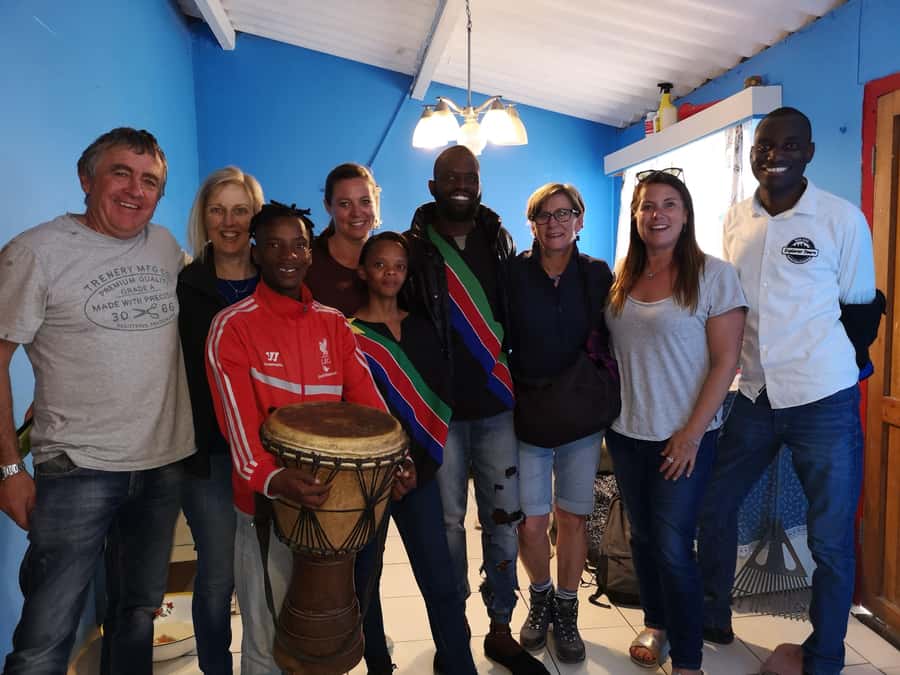
- Mondesa and DRC in one short outing: You see established township streets, homes, schools, and the Democratic Resettlement Community.
- A private guide leads the way: Your group can ask questions and travel at a more personal pace than on a large coach tour.
- Traditional food is part of the experience: Expect dishes such as mahangu porridge, mopane worms, beans, barbecue chicken, ground nuts, and wild fruits.
- Nama and Herero culture receive special attention: A Nama herbalist explains plants and remedies, while a Herero woman discusses clothing and customs on afternoon and weekend tours.
- The price includes transport and lunch: At $80 per person, the value depends on how much you value direct community contact and a private group.
- Come prepared for sun and walking: Wear comfortable shoes, bring sunglasses, a hat, and sunscreen, and leave large bags behind.
Why Mondesa adds another side of Swakopmund

Swakopmund is easy to enjoy from its central streets, waterfront, and German colonial buildings. Yet those familiar sights tell only part of the town’s story. Mondesa gives you a look at daily community life and at the social changes shaping Swakopmund today.
The tour begins with hotel pickup, then heads into Mondesa by vehicle. A short introduction covers the township’s background before you continue along OB Street. This is not a polished sightseeing route. You may see ordinary homes, schools, and local streets, with your guide explaining what you are looking at and helping you speak with residents.
That matters because a township visit can feel uncomfortable if you are simply driven through and told to look. Here, the stated aim is conversation and contact. Your guide helps provide context, while you should still approach people with courtesy and avoid treating homes or daily routines as photo props.
The private format helps. You can ask about a building, a custom, or a local issue without waiting for a large group to catch up. An English or German-speaking guide is available, and an audio guide is also listed in those languages.
More Township Tours in Swakopmund
- Swakopmund: Mondesa Township Day Tour Experience
★ 3.8 · 25 reviews - Swakopmund Best Cultural Historical Township Tours Namibia
★ 5.0 · 8 reviews - Explorer Historical Private Township Cultural Tours
★ 4.0 · 6 reviews
OB Street offers a look at ordinary life
The walk along OB Street is one of the most grounded parts of the outing. You get a glimpse of typical township homes and schools, rather than a performance designed only for tourists. Your guide can point out details that would otherwise pass unnoticed and explain how the area functions as a place to live, work, and raise families.
You should expect a respectful street walk, not a formal museum visit. Conditions may be basic, and the visit asks you to stay alert to the fact that this is someone’s neighborhood. Comfortable shoes are a sensible choice, and sun protection is important in the open Namibian climate.
A small home craft market follows. Local artists offer crafts, giving you a chance to see handmade work and buy a souvenir if something catches your eye. Souvenirs are not included in the price, so bring extra money if you plan to shop.
This stop is useful for two reasons. It supports local makers, and it gives you a quieter way to interact with the community after the street walk. Do not expect a large market with endless stalls. The appeal is its small scale and direct connection to the people making the goods.
DRC explains resettlement and housing
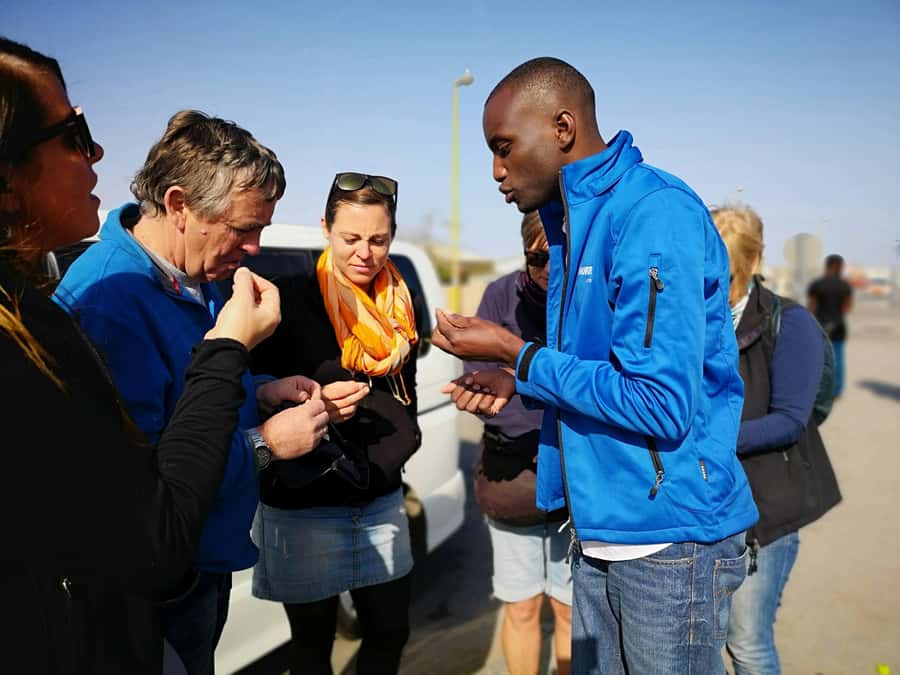
The route continues to the Democratic Resettlement Community, usually shortened to DRC. This stop shifts the focus from household life to housing and municipal planning.
You learn about housing projects and the ways the Swakopmund Municipality is improving the area. That makes DRC an important part of the tour because it shows that Mondesa is not frozen in one period. The community is connected to ongoing efforts to improve housing and services.
The visit may be especially useful if you want social context rather than a quick cultural display. Your guide can help explain the difference between established township areas and newer resettlement zones. The information provided does not promise a long presentation or a visit inside housing projects, so think of this as a guided orientation rather than a technical planning tour.
The order of stops also keeps the experience varied. After seeing streets, homes, schools, and crafts, you move into a conversation about how residents are being housed and how the municipality is addressing the area. In a three-hour tour, that broad view is valuable, though the schedule leaves limited time for extended discussion.
A Nama herbalist shares plant knowledge
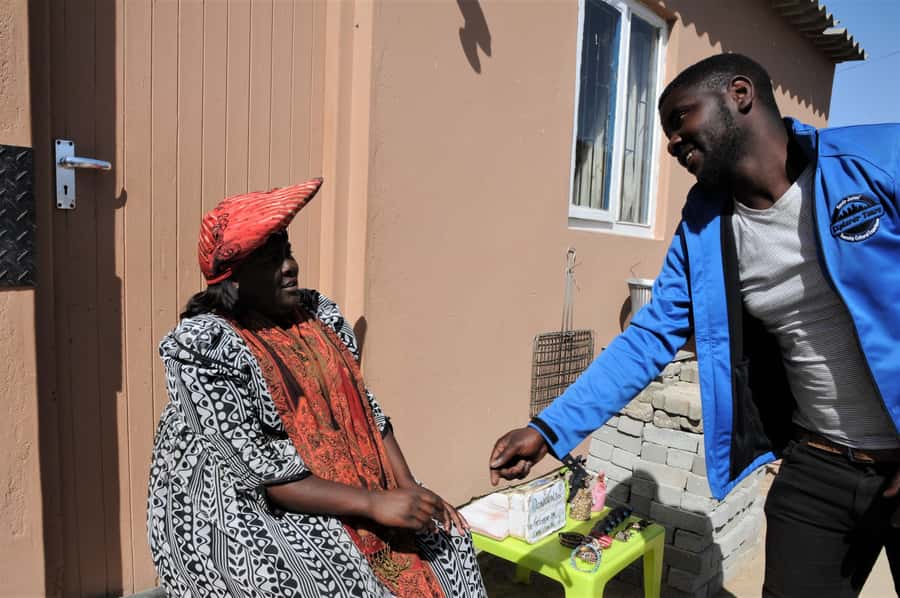
One of the most distinctive stops is with a traditional Nama herbalist. She explains Nama culture and her use of herbal medicines, bringing the tour into the realm of local knowledge passed through families and communities.
This is not simply a talk about plants. It connects medicine, culture, and the natural world around Namibia. You may come away with a better sense of how traditional remedies fit within Nama life, even if the session cannot cover every plant or treatment in detail.
Keep the right expectations. This is a cultural explanation, not medical advice or a treatment session. You should listen carefully and avoid assuming that a remedy discussed during the visit is suitable for personal use.
The stop also adds a human voice to the tour. Instead of hearing only broad statements about Namibian culture, you meet someone who can explain a specific tradition from her own role in the community. That kind of direct contact is one of the strongest reasons to choose this experience.
A completely different kind of day:
- Walvis Bay: Marine Big 5 Luxury Catamaran Tour
★ 4.8 · 1,012 reviews - Swakopmund: Desert Dunes Quad Biking with Optional Sandboard
★ 4.9 · 590 reviews - Walvis Bay and Sandwich Harbour Tour
★ 4.8 · 483 reviews - Scenic Sandwich Harbour Tour
★ 5.0 · 277 reviews
Herero dress and culture, with a timing limit
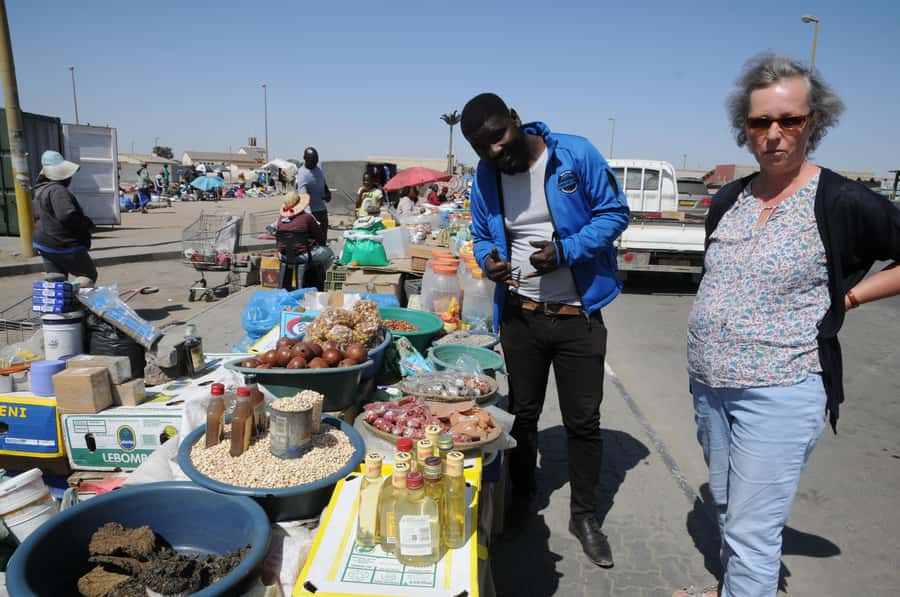
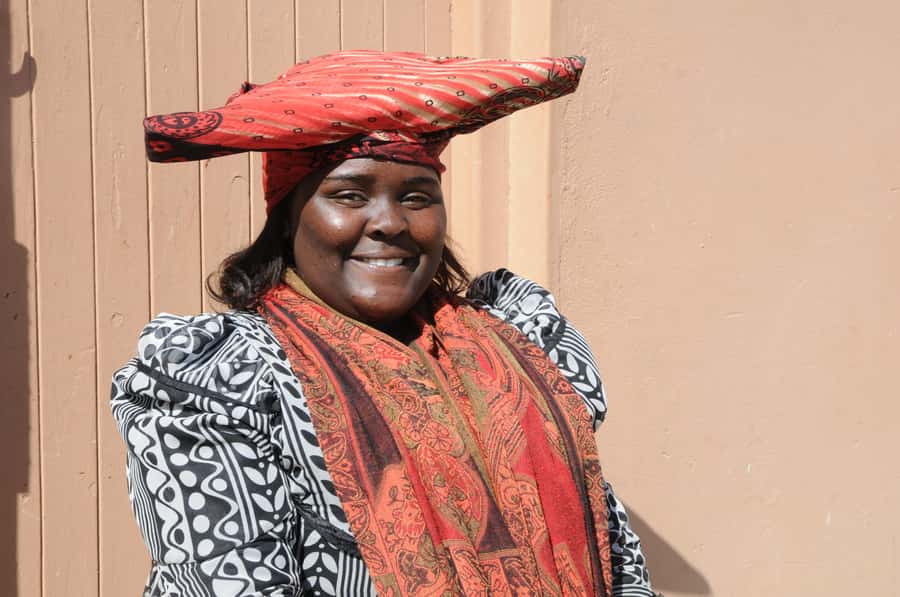
Afternoon and weekend tours include a visit to a Herero woman who discusses her clothing and Herero culture. Herero dress is visually distinctive, but the value here is hearing the meaning and background from the person wearing it rather than treating the clothing as a costume display.
This stop is not available on every departure. If learning about Herero culture is a main reason for booking, check that your chosen time is an afternoon or weekend tour. The listed tour length remains three hours, so the exact amount of time at each stop may be limited.
The combination of Nama and Herero perspectives is a strong feature. You are not given one catch-all version of Namibian culture. Instead, the tour introduces different cultural traditions and lets each person explain her own area of knowledge.
Music, a shebeen, and a meal at home
The tour includes a live a cappella performance, one of the more memorable ways to connect with local culture. Singing changes the mood of the visit and gives you something shared to enjoy without needing a lecture or a display case.
You also stop for drinks at a shebeen, a local African bar. This can be a revealing social stop because it shows a familiar meeting place within the township. It is also a good moment to ask your guide about local customs and daily life.
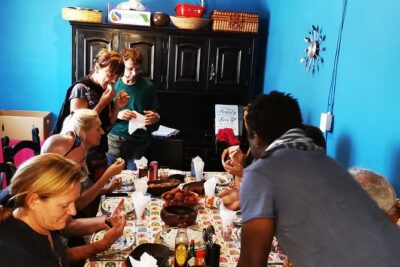
The meal takes place at a local family home. The experience includes a traditional lunch, although the description also refers to a local lunch or dinner, so the meal timing depends on the departure. The point is not fine dining. It is the chance to sit with a family and try foods that are part of Namibian home cooking.
Possible dishes include:
- Ondjuhwa, barbecue chicken
- Omagungu, mopane worms
- Mahangu porridge made from millet
- Omakunde, beans
- Oofukwa, ground nuts
- Onyandi, Oombe, and Ondunga, wild fruits and berries
This menu gives you a useful introduction to local ingredients and flavors. Mahangu is especially important as a staple grain, while mopane worms may be the item that makes cautious eaters pause. You do not need to pretend every dish is familiar or appealing. A polite willingness to try small portions is enough.
The food stop is also where the tour’s social purpose becomes clearest. You are not just looking at a neighborhood from a vehicle. You are sharing food in a family setting and meeting people in a more personal way.
Is $80 per person good value?
The price is $80 per person. That includes transport and a traditional lunch, while souvenirs cost extra. Since the tour is private, the value is better for couples, families, or small groups who want their guide’s attention rather than a cheaper large-group outing.
You are paying for more than a transfer and a meal. The fee covers a three-hour route through several parts of Mondesa, a private guide, cultural presentations, food, and community visits. The Nama herbalist, Herero cultural discussion, music, shebeen stop, and family meal give the outing a wider range than a simple neighborhood drive.
Still, the schedule is compact. If you prefer one subject explored slowly, three hours may feel rushed. If you enjoy variety and want a broad introduction in half a day, the structure works better.
The tour also makes sense for visitors who have already seen central Swakopmund and want a different setting. It gives you context that you are unlikely to get from the main tourist streets alone. I would consider the price fair for a private experience, provided your priority is personal contact and cultural learning rather than a long sightseeing route.
What to bring and what to expect

Hotel pickup keeps the start simple. Transport is included, and the tour is offered for private groups. English and German are available, which is useful for visitors who want more detailed conversation in German. One verified booking praised the guide’s excellent German and his ability to explain Mondesa and its past in an especially personal way because he originally came from the township.
That detail matters. A guide with a direct connection to Mondesa can provide local insight that a guide who only knows the area from books may not offer. The specific guide’s name is not provided, and guide assignments can vary, so I would confirm language needs when booking.
Bring comfortable shoes, sunglasses, a sun hat, and sunscreen. Leave pets, smoking materials, luggage, and large bags behind. The experience is wheelchair accessible, but people with back problems should not book it, and it is not considered suitable for pregnant women.
Families should note the request to bring sweets or stationery for children. Treat this carefully. Small gifts can be welcome, but you should follow your guide’s advice and avoid turning the visit into a handout line. Stationery may be the more useful choice.
Free cancellation is available up to 24 hours before the tour for a full refund, and you can reserve now and pay later. Those terms are helpful if your Swakopmund plans are still shifting.
Who will enjoy this Mondesa tour most?

I would recommend this tour to you if you want direct contact with local people, enjoy trying unfamiliar food, and prefer a private setting. It is also a good fit if you want cultural variety in a short period: township history, crafts, housing, Nama traditions, Herero dress, music, a bar, and a family meal all appear in one compact outing.
It may not suit you if you want a quiet scenic drive, a polished performance, or a long food tasting. Some parts require walking, and the subject matter can be serious. You need to approach the visit with respect and patience.
The tour is also a strong choice for German-speaking visitors, especially if a German guide is important to you. English is available as well. Because the Herero visit is limited to afternoon and weekend departures, check the timing before you pay.
Should you book the Mondesa Cultural Township Tour?
Book it if you want to understand more of Swakopmund than its postcard center. The strongest features are the private format, the local family meal, the Nama herbalist, and the guide’s potential personal connection to Mondesa.
At $80 per person, it is not the cheapest way to fill three hours. But transport, lunch, several cultural encounters, live singing, and a private guide give the price a reasonable base. Choose an afternoon or weekend departure if the Herero culture visit matters to you, wear light practical clothing, and arrive ready to listen as much as you look.
FAQ
Where does the Mondesa Cultural Township Tour take place?
The tour takes place in Mondesa Township in Swakopmund, within Namibia’s Erongo region. It also visits the Democratic Resettlement Community, known as DRC.
How long does the tour last?
The tour lasts three hours.
How much does the tour cost?
The listed price is $80 per person.
Is hotel pickup included?
Yes. Pickup from your hotel accommodation is included, along with transport during the tour.
Is lunch included?
Yes. A local traditional lunch is included. The experience description also refers to a local family lunch or dinner, so the meal timing depends on the departure.
What languages are available?
The live guide and audio guide are available in English and German.
Is the tour private?
Yes. The tour is offered for a private group.
Is the tour wheelchair accessible?
Yes, the activity is listed as wheelchair accessible. It is not suitable for people with back problems or pregnant women.
Can I cancel the booking?
Yes. You can cancel up to 24 hours in advance for a full refund. You can also reserve the experience and pay later.
Just added in Swakopmund
- Windhoek: Township Tour amongst the locals★ 4.0 · 1 review
- Walvis Bay Shore Excursion: Flamingos, Dune 7, Swakopmund★ 5.0 · 3 reviews
- Unforgettable Half Day Adventure, Explore Sandwich Harbour★ 5.0 · 3 reviews
- Swakopmund Township Home Cooking Experience★ 5.0 · 1 review
- Swakopmund Explorer Township Tour in Mondesa with Nande the Township Local Guide★ 5.0 · 4 reviews
- Walvisbay Dune 7 and Swakopmund Town Half Day Guided Tour★ 4.0 · 4 reviews
- Spitzkoppe – Day Tour to the Spitzkoppe Mountain from Swakopmund★ 5.0 · 3 reviews
- Sandwich Harbour 4×4 Tour★ 5.0 · 8 reviews
Township Tours in Swakopmund, compared.

Swakopmund Best Cultural Historical Township Tours Namibia
Read our review →
Explorer Historical Private Township Cultural Tours
Read our review →

Half Day Swakopmund Cultural Historical Township Tour
Read our review →
Swakopmund Explorer Township Tour in Mondesa with Nande the Township Local Guide
Read our review →
Browse the lists this tour appears in