
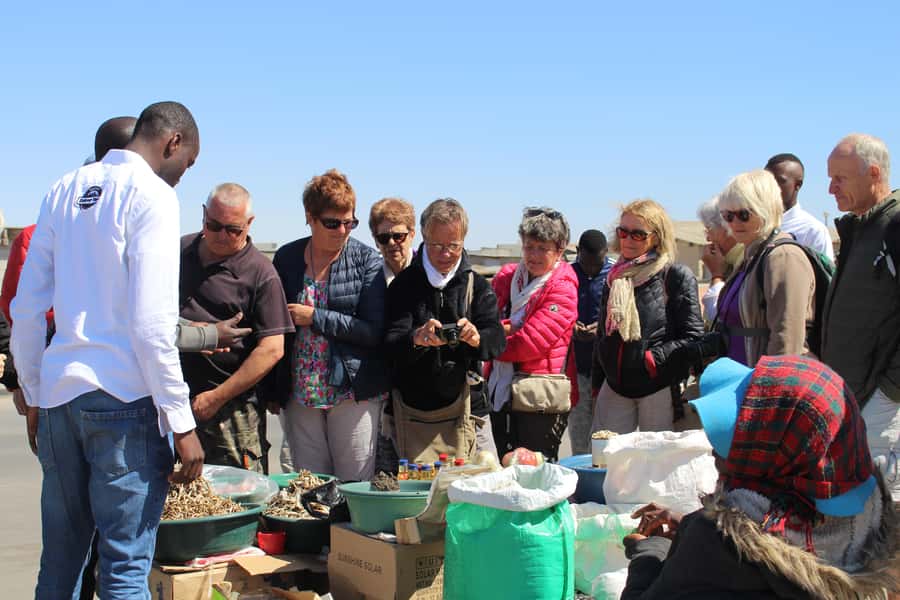
Reviewed · TOWNSHIP TOURS IN SWAKOPMUND
Swakopmund: Township Walking Tour with Local Guide
Swakmund shows two sides. This four-hour walking tour pairs Mondesa’s living culture with Swakopmund’s colonial streets, museum, lighthouse, crystal gallery, and Woermann Tower. I like the chance to meet local residents over homemade craft beer or grilled caterpillars, and I like that the tour explains apartheid’s effects instead of presenting only the pretty seaside buildings. The main consideration is the walking: the activity is listed as not suitable for people with mobility impairments, even though wheelchair access is also mentioned.
The $80 price includes hotel pickup, entrance fees, and a bottle of water. I think that is fair if you want history, local conversation, and food in one outing. Still, coffee and tea cost extra, and the four-hour schedule may feel full if you prefer a slow museum visit.
In This Review
- Key points to know before you book
- Starting in Mondesa, where Swakopmund tells the harder story
- Tasting Mondesa: caterpillars, craft beer, and conversation
- Khoe-Khoe words and the meaning of buntu
- Meeting a Nama herbalist
- Colonial Swakopmund: museum, streets, and the sea
- The crystal gallery and Woermann Tower
- What the four-hour schedule means for you
- Price, inclusions, and practical comfort
- Who will enjoy this Swakopmund walk?
- Should you book the Mondesa tour?
- FAQ
- How long does the Swakopmund township walking tour last?
- What is included in the tour price?
- Where does the tour go?
- What languages are available?
- What should I bring?
- Can I cancel the tour?
Key points to know before you book
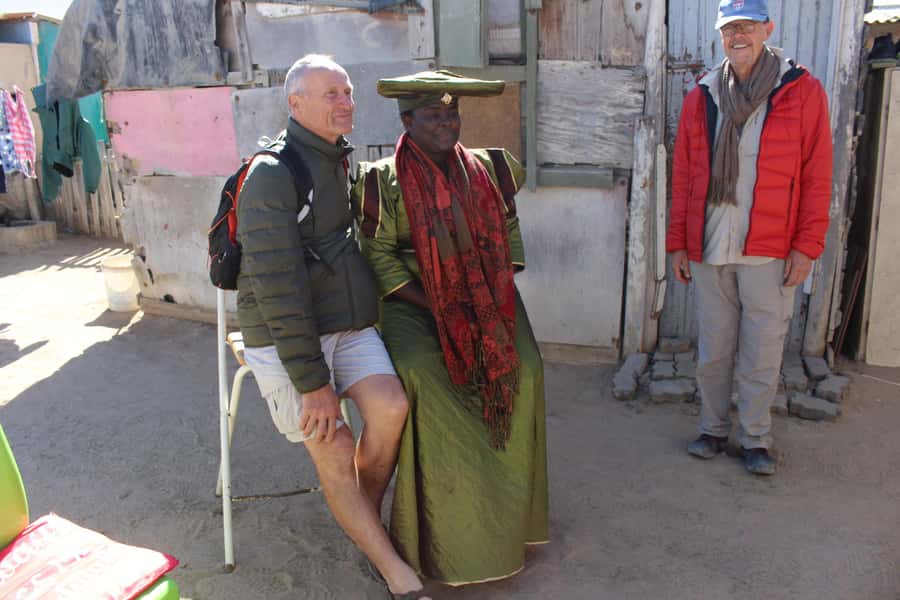
- Mondesa is the heart of the tour: See how apartheid shaped the district and how local life continues today.
- Food is part of the experience: You might taste grilled caterpillars, local delicacies, and homemade craft beer.
- Colonial Swakopmund gets proper context: Visit the museum, lighthouse, Lutheran church, crystal gallery, and Woermann Tower.
- A local guide adds the human story: Learn a few words in Khoe-Khoe and hear about Nama culture and herbal medicine.
- Hotel pickup keeps the morning or afternoon simple: Pickup is included from accommodation in and around Swakopmund.
- Plan for sun and walking: Comfortable shoes, a hat, sunglasses, sunscreen, and a camera are useful.
Starting in Mondesa, where Swakopmund tells the harder story

The tour begins with pickup from your accommodation in and around Swakopmund. From there, you head to Mondesa District, where the experience moves beyond the carefully maintained center and seaside promenade.
Swakopmund is often introduced through its German colonial buildings, palm-lined streets, Atlantic beaches, and desert setting. Those sights matter, but they do not tell the whole story. Mondesa helps you understand how the town was divided during apartheid and how those divisions still leave visible traces, even after segregation ended in 1991.
I value this part because it gives the rest of the tour more meaning. When you later walk past old colonial buildings, you have already heard how the town worked for different groups of people. The architecture is easier to understand when you also consider who had access to which parts of Swakopmund.
Your guide leads you on foot through Mondesa and introduces you to local residents. The emphasis is on conversation rather than simply passing through with a camera. You may be invited to try traditional delicacies or homemade craft beer, giving you a direct connection with daily life in the district.
That personal contact is also the reason to behave thoughtfully. Ask before photographing people, listen carefully, and accept that food customs may be different from your own. The tour offers a chance to meet people, not a staged performance.
More Township Tours in Swakopmund
- Swakopmund: Mondesa Township Day Tour Experience
★ 3.8 · 25 reviews - Swakopmund Best Cultural Historical Township Tours Namibia
★ 5.0 · 8 reviews - Explorer Historical Private Township Cultural Tours
★ 4.0 · 6 reviews
Tasting Mondesa: caterpillars, craft beer, and conversation
Food is one of the tour’s most unusual features. You may taste regional flavors including grilled caterpillars, along with other local delicacies. Drinks at a typical African bar are also included in the experience, although coffee and tea are not covered.
Grilled caterpillars will not appeal to everyone. That is fine. You can treat the tasting as an introduction to local foodways rather than a test of courage. The useful part is the setting: you can ask what you are eating, how it is prepared, and when people enjoy it.
Homemade craft beer gives the visit another local touch. Since the information does not specify the exact type or strength, you should treat it as a tasting opportunity rather than expect a formal brewery visit. If you do not drink alcohol, ask your guide what alternatives are available.
The stop at a typical African bar helps connect the food to social life. You get a glimpse of how people gather, talk, and share refreshments. This is far more personal than simply reading a label in a museum, though the experience depends on your guide’s ability to help conversations flow.
Khoe-Khoe words and the meaning of buntu

The guide introduces a few words in Khoe-Khoe, the local language identified in the tour description. You also learn about the African term buntu. The point is not to become fluent in one afternoon. It is to show how language and values shape a community.
I like this small language lesson because it gives you something practical to carry into the rest of your visit. Even a few words can make an exchange more respectful and more relaxed. Listen closely to pronunciation, and do not worry about getting everything right on the first try.
The discussion of buntu also adds a social idea to the walk. The experience presents it as part of understanding African culture and local relationships. Since the exact explanation can vary by guide, use the conversation as an invitation to ask questions rather than as a single definition to memorize.
This is one reason a live guide matters here. An English or German audio guide can provide extra information, but it cannot respond to your questions or explain a social moment in the same way. The live guide leads the human side of the tour.
Meeting a Nama herbalist
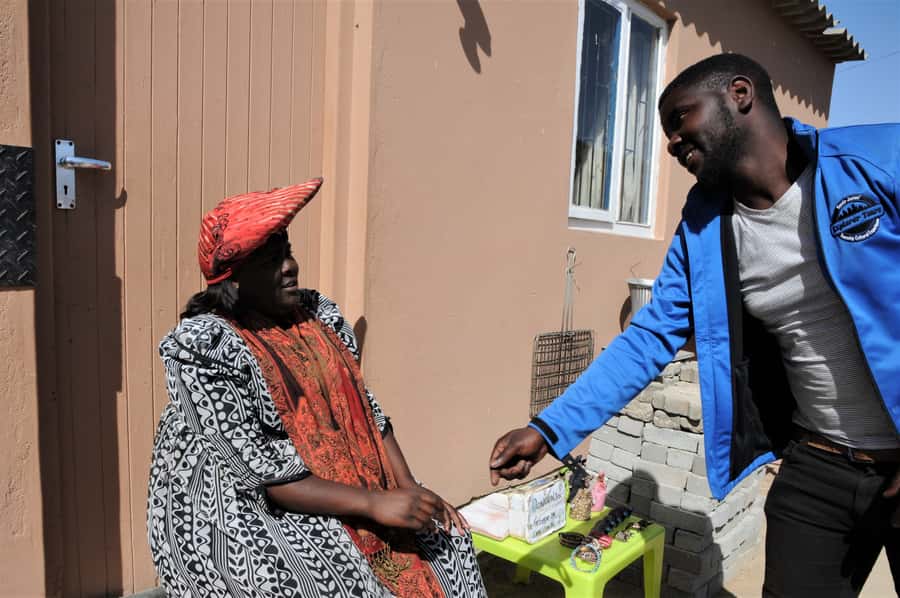
A visit with a traditional Nama herbalist adds another layer to the Mondesa portion. She shares knowledge of Nama culture and traditional herbal medicines.
This stop is best approached with respect and curiosity. Traditional medicine is not the same as a pharmacy consultation, and the tour does not present it as medical treatment. You are listening to cultural knowledge and learning how plants and healing traditions fit into Nama life.
I would not plan to buy or use any remedy unless you fully understand what it is and how it should be used. The value here is the conversation, not collecting a cure. Ask clear questions, and remember that a short visit can only introduce a small part of Nama knowledge.
The herbalist visit also keeps the tour from reducing Mondesa to its political past. You hear about apartheid, but you also encounter culture, language, food, and family traditions. That balance matters.
A completely different kind of day:
- Walvis Bay: Marine Big 5 Luxury Catamaran Tour
★ 4.8 · 1,012 reviews - Swakopmund: Desert Dunes Quad Biking with Optional Sandboard
★ 4.9 · 590 reviews - Walvis Bay and Sandwich Harbour Tour
★ 4.8 · 483 reviews - Scenic Sandwich Harbour Tour
★ 5.0 · 277 reviews
Colonial Swakopmund: museum, streets, and the sea

The tour also explores the older center of Swakopmund. Its setting is unusual: the Namib Desert reaches toward the chilly Atlantic Ocean, while the town’s streets include palms, seaside promenades, and carefully maintained colonial buildings.
The Museum of Swakopmund is a key stop. Entrance fees are included, so you do not need to set aside extra money for the listed visits. The museum gives you a formal place to organize the facts you have already started hearing in Mondesa.
Expect the museum to complement the walking rather than replace it. The tour is only four hours, and the schedule includes several locations, so this may not be the right choice if you want to inspect every display at length. For most people, the advantage is the combination of museum information and street-level explanation.
You also visit the lighthouse and learn about its history. The lighthouse is a useful reminder of Swakopmund’s coastal role, and it gives the town a clear visual marker. Bring sunglasses and a hat, since the sun can be strong even when the Atlantic air feels cool.
The old colonial streets and the Lutheran church add architectural interest. You can see how European styles were placed in a desert port, then compare those preserved buildings with the modern life around them. I like that the walk does not treat the buildings as isolated ornaments. Their meaning becomes clearer after the guide has discussed the town’s past.
The crystal gallery and Woermann Tower
The crystal gallery supplies a change of pace from politics and architecture. It is described as a place filled with impressive crystal displays, so this stop should appeal to anyone interested in minerals, geology, or unusual natural formations.
The gallery is especially suitable for a short visit because it adds visual variety to the day. After walking through residential streets and hearing about local culture, you get a more focused look at the region’s natural treasures. The experience does not specify the exact displays or whether demonstrations take place, so keep expectations centered on viewing the collection.
Woermann Tower is another important landmark on the route. Its inclusion helps you read Swakopmund’s old center as a working town, not just a collection of photogenic facades. The guide can connect the tower with the wider story of commerce, colonial administration, and the town’s coastal position.
I recommend bringing a camera, as the tower, lighthouse, church, crystal gallery, and colonial streets offer very different subjects. Ask your guide about photography rules inside the museum and gallery before taking pictures.
What the four-hour schedule means for you
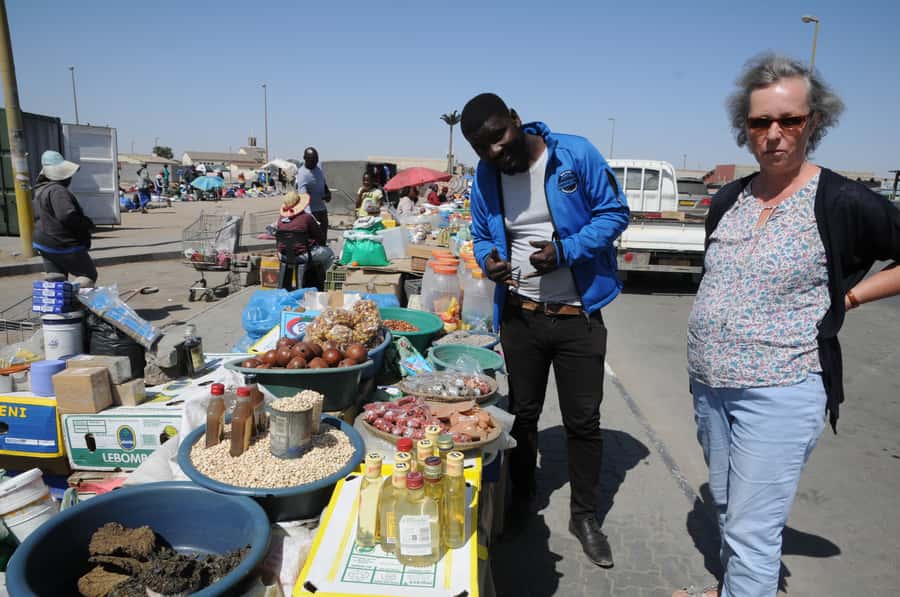
Four hours is long enough to create a rounded introduction to Swakopmund, but not long enough for every stop to receive unlimited attention. You cover Mondesa, local food and conversation, a herbalist visit, the museum, colonial streets, the lighthouse, the Lutheran church, the crystal gallery, and Woermann Tower.
That is a lot for one outing. I see the benefit if you want a strong first look at the town and do not want to arrange separate visits. You get transport at the beginning, entrance fees, a live guide, and a clear route.
The tradeoff is pace. You may need to keep moving between stops, particularly if conversations in Mondesa take more time. The most valuable moments may be the unscheduled ones, such as a local exchange or a question about apartheid, but a full route can limit how long those moments last.
Starting times vary, so check availability when you book. English and German live guiding are available, and an English or German audio guide is included. That makes the tour useful for speakers of either language, though I would rely on the live guide for the cultural discussions.
Price, inclusions, and practical comfort
At $80 per person, this is not the cheapest way to walk around Swakopmund. But the price includes hotel pickup, entrance fees, and water, while also combining several types of experience. If you paid separately for transport, museum access, and local guiding, the package could represent reasonable value.
The best value comes from the context. You are not simply checking off the Museum of Swakopmund and Woermann Tower. You are hearing how the town developed, how Mondesa was affected by apartheid, and how Nama traditions and local food fit into present-day life.
Bring your passport or ID card, comfortable shoes, sunglasses, a sun hat, sunscreen, and a camera. The tour involves walking outdoors, and Swakopmund’s desert setting means sun protection matters even when the coastal air feels chilly.
A bottle of water is included. Coffee and tea are not, so plan accordingly. Pets are not allowed.
There is one point I would clarify before booking. The activity is marked wheelchair accessible, but it is also marked not suitable for people with mobility impairments. Those statements do not fully agree. If you use a wheelchair or have difficulty walking, contact Explorer Tours Swakopmund before paying and ask exactly which streets, buildings, and stops can accommodate you.
Free cancellation is available up to 24 hours before the tour for a full refund. You can also reserve now and pay later, which helps if your Swakopmund schedule depends on other activities.
Who will enjoy this Swakopmund walk?
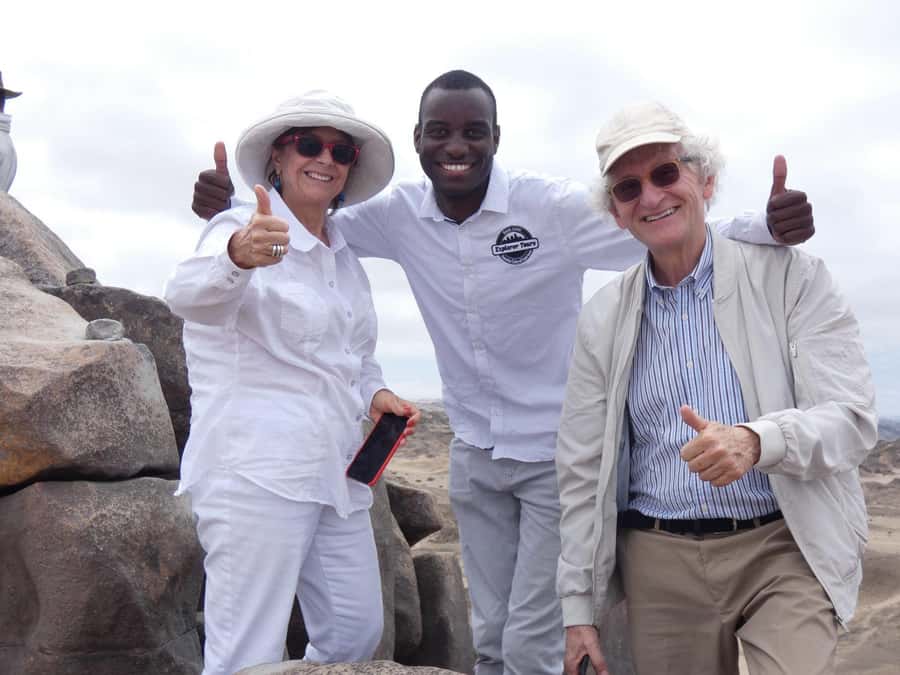
I recommend this tour if you want more than a quick look at colonial architecture. It suits you if you enjoy meeting people, trying unfamiliar foods, asking cultural questions, and understanding how history affects present-day neighborhoods.
It is also useful early in a Swakopmund visit. The tour gives you basic orientation to the center, Mondesa, the museum, the coast, and major landmarks. Afterward, you will know which places deserve a second look at your own pace.
You may want a different plan if your main goal is a relaxed architectural walk with very little food tasting or social contact. The Mondesa portion is central to the experience, and its discussions may feel serious. The food is also adventurous, and not every visitor will want to try caterpillars or homemade beer.
The tour is less suitable if you dislike walking, need guaranteed step-free access, or prefer a tightly scripted sightseeing route. The exact balance between conversation and sightseeing can change with the group and the guide.
Should you book the Mondesa tour?
Book it if you want Swakopmund explained through both its buildings and its people. The strongest parts are the Mondesa visit, the discussion of apartheid, the Nama herbalist, and the chance to share local food and conversation. Those elements give the town a human scale.
Skip it if you only want the museum, lighthouse, and colonial streets, since you could focus on those sights separately. At $80, the tour makes the most sense when you value a local guide, hotel pickup, cultural contact, and included entrance fees as much as the landmarks themselves.
For an open-minded visitor with four hours to spare, it offers a thoughtful introduction to Swakopmund, with a few unusual tastes along the way.
FAQ
How long does the Swakopmund township walking tour last?
The tour lasts four hours.
What is included in the tour price?
The price includes a bottle of water, entrance fees, and pickup from accommodation in and around Swakopmund.
Where does the tour go?
The tour visits Mondesa District, the Museum of Swakopmund, the lighthouse, the crystal gallery, Woermann Tower, old colonial streets, and the Lutheran church. It also includes a visit with a traditional Nama herbalist and time at a typical African bar.
What languages are available?
Live guiding and the included audio guide are available in English and German.
What should I bring?
Bring a passport or ID card, comfortable shoes, sunglasses, a sun hat, sunscreen, and a camera.
Can I cancel the tour?
You can cancel up to 24 hours in advance for a full refund. Reserve now and pay later is also available.
More Walking Tours in Swakopmund
- Windhoek: Bushman Walk with the San
★ 4.9 · 145 reviews - Private Guided Walking Tour with the San in Windhoek
★ 5.0 · 20 reviews - Windhoek: Katutura Township and City Walking Tour
★ 4.7 · 15 reviews - Windhoek : Cheetah walk Experience
★ 4.6 · 8 reviews
Just added in Swakopmund
- Windhoek: Township Tour amongst the locals★ 4.0 · 1 review
- Walvis Bay Shore Excursion: Flamingos, Dune 7, Swakopmund★ 5.0 · 3 reviews
- Unforgettable Half Day Adventure, Explore Sandwich Harbour★ 5.0 · 3 reviews
- Swakopmund Township Home Cooking Experience★ 5.0 · 1 review
- Swakopmund Explorer Township Tour in Mondesa with Nande the Township Local Guide★ 5.0 · 4 reviews
- Walvisbay Dune 7 and Swakopmund Town Half Day Guided Tour★ 4.0 · 4 reviews
- Spitzkoppe – Day Tour to the Spitzkoppe Mountain from Swakopmund★ 5.0 · 3 reviews
- Sandwich Harbour 4×4 Tour★ 5.0 · 8 reviews
Township Tours in Swakopmund, compared.

Swakopmund Best Cultural Historical Township Tours Namibia
Read our review →
Explorer Historical Private Township Cultural Tours
Read our review →

Half Day Swakopmund Cultural Historical Township Tour
Read our review →
Swakopmund Explorer Township Tour in Mondesa with Nande the Township Local Guide
Read our review →
Browse the lists this tour appears in