
Reviewed · ETOSHA SAFARIS
Safari in Etosha national park with professional tour guides born in Etosha.
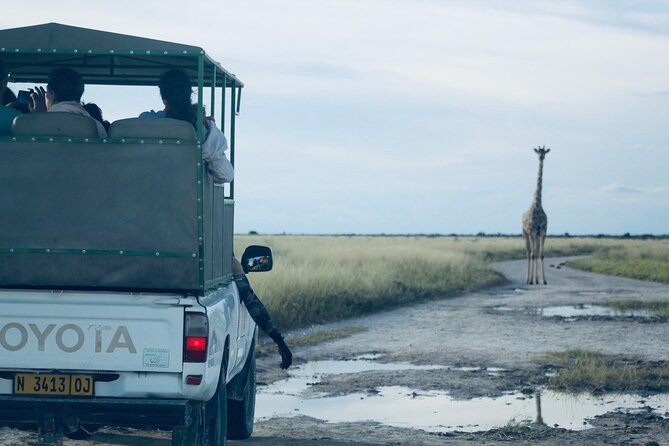
White salt, wild animals, long roads. This Etosha safari pairs an open-sided viewing vehicle with guides born in the park area, giving you a local perspective on the animals, dry country, and watering holes. I like the chance to spend a full day searching for lions, rhinos, leopards, and elephants, and I also like the small group size, capped at nine people.
The vehicles are regularly serviced, fully insured, and designed for clear views on both sides. Mini blankets are supplied for chilly desert mornings, a small but welcome touch. The main drawback is simple: wildlife is never guaranteed. One full-day outing produced only two elephants, zebras, springbok, and squirrels, so you need patience as well as luck.
In This Review
- Quick points about the Etosha safari
- Why Etosha works so well for a safari
- Meeting Isack and Oscar in the park
- What the open-sided vehicle is like
- The Etosha Pan stop
- Searching the watering holes for wildlife
- Choosing between half-day and full-day timing
- What the $127.76 price really covers
- Who will enjoy this Etosha experience
- Practical details before you book
- Should you book the Yavola Tours safari?
- FAQ
- How long does the Etosha safari last?
- Are Etosha National Park entrance fees included?
- How many people can join the tour?
- What is included in the tour price?
- Can I see lions, rhinos, leopards, and elephants?
- What happens if bad weather cancels the safari?
Quick points about the Etosha safari
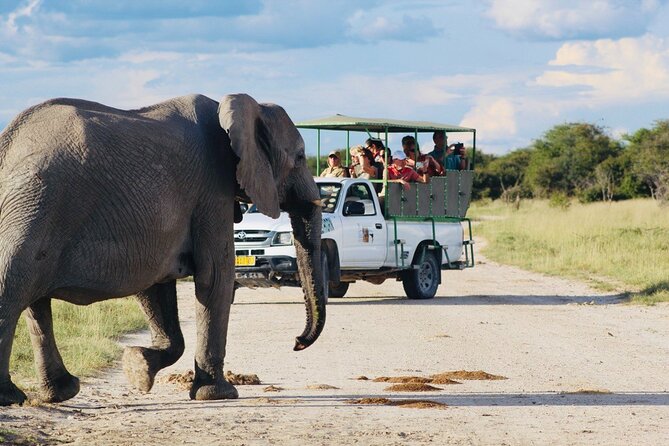
- Guides born in Etosha: Isack and Oscar are praised for their warm manner, sharp eyes, and understanding of local wildlife.
- The famous Etosha Pan: You get a brief stop at the huge white salt pan, one of the park’s most striking sights.
- A maximum of nine people: The smaller group should make it easier to ask questions and get a clear view from the vehicle.
- Wildlife hotspots: Watering holes and known animal areas are used to improve your chances of finding elephants, lions, rhinos, leopards, and other species.
- Cold mornings are considered: Mini blankets are available, which matters in an open vehicle before the desert warms up.
- Park fees cost extra: You pay N$150 per person for entry, in addition to the tour price of $127.76.
Why Etosha works so well for a safari
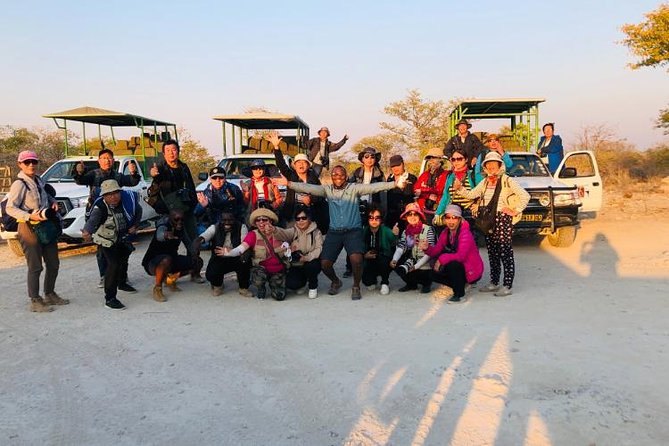
Etosha offers a different kind of safari setting. Instead of thick woodland or broad grassy plains, you get a dry, pale world shaped by the great salt pan. The white ground, sparse vegetation, and concentrated water sources make the search for animals feel focused and deliberate.
Watering holes are especially important here. In a dry park, animals must visit reliable water sources, so your guide can spend time checking places where sightings are more likely. That does not turn the safari into a guaranteed wildlife show, but it gives the day a sensible plan.
I like this style of wildlife watching because you are not simply driven around at random. Your guide is looking for tracks, movement, birds, animal behavior, and the conditions that may bring wildlife to water. You should still expect quiet stretches. Etosha rewards attention, not impatience.
The tour also supports a locally run operation, with guides born in the Etosha area. That matters because the value of a safari is not only the vehicle or the number of animals seen. A local guide can help you understand the place as a home region, not just a backdrop for photographs.
More Etosha safaris:
- Etosha National Park: Full or Half-Day Game Drive
★ 4.6 · 175 reviews - ETOSHA PARK SAFARI with local guides in 9-seater 4x4s
★ 5.0 · 87 reviews - 3 Day Etosha Budget Camping Safari
★ 5.0 · 37 reviews
Meeting Isack and Oscar in the park
Two guides receive particularly strong praise: Isack and Oscar. Isack is described as friendly, funny, and attentive, with a strong grasp of animals, the environment, and the details that make a sighting meaningful.
He also seems to have the right attitude for a game drive. If you notice an animal, nest, or movement beside the road, you can ask to stop and take a closer look. That flexibility is valuable. Some of the best moments on safari are not always the headline animals, but the smaller discoveries you would have missed without someone willing to pause.
Oscar is also praised for his friendly and easygoing approach. On one especially successful outing, he helped identify cheetahs, elephants, giraffes, zebras, springbok, kudu, buffalo, and several kinds of birds. That is a strong range of sightings, although it should be treated as a lucky day rather than a promise.
The most important point is that the guide can shape the quality of the experience. An elephant sighting is exciting on its own, but it becomes more useful when someone explains what you are seeing and answers your questions without rushing you. The best guides keep watch while also making the park understandable.
What the open-sided vehicle is like
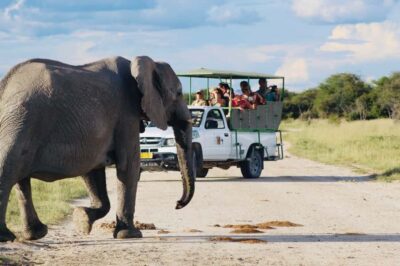
The vehicle is built for safari viewing, with open sides and good all-round visibility. That gives you a much better chance of spotting movement than you would have from a sealed passenger vehicle.
An open vehicle also keeps you connected to the setting. You can feel the cool morning air, see across the salt-colored ground, and scan both sides of the road more easily. The trade-off is exposure. Early starts can be cold, and the supplied mini blankets are more than a decorative extra.
The vehicles are fully insured and regularly serviced. That does not tell you exactly how smooth every road will feel, but it does provide useful reassurance for a long day in a national park.
With a maximum of nine people, the group is not private, but it is still fairly limited. You should have a better chance of asking questions and shifting your attention when something appears. If the vehicle is full, your view can still depend on where you are seated, so it is sensible to follow the operator’s instructions and stay alert on both sides.
The Etosha Pan stop
The itinerary includes a short stop at Etosha Pan, described as the great white salt area. The listed stop lasts about 10 minutes, with admission included for that part of the tour.
Do not expect a long walk or an extended geological lesson here. This is a brief chance to see the feature that gives the park much of its character. The pan’s pale, open surface creates a sharp contrast with the animals and scattered vegetation around it.
The stop is worthwhile because it gives you a visual reference for the rest of the day. Once you have seen the scale and color of the pan, the dry setting makes more sense. You can also appreciate why water sources are so important to wildlife in this region.
The limitation is time. Ten minutes is enough to look, photograph, and take in the view, but not enough for a slow exploration. Think of this as a scenic pause within a larger wildlife search, not the main event.
More safaris in Namibia:
- 6-Day Dunes and Wildlife Accommodated Safari from Windhoek
★ 5.0 · 123 reviews - Elephant Adventure with Herson – a native of Damaraland
★ 4.7 · 96 reviews - 12 Day Classic Namibia Camping Safari
★ 5.0 · 77 reviews - 3 Day Sossusvlei Budget Camping Safari
★ 5.0 · 62 reviews
Searching the watering holes for wildlife
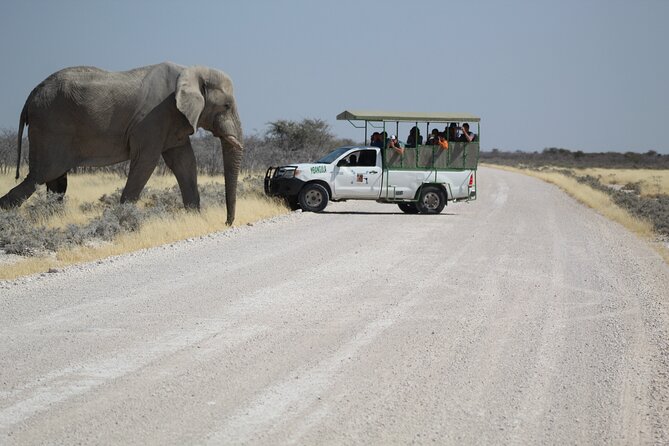
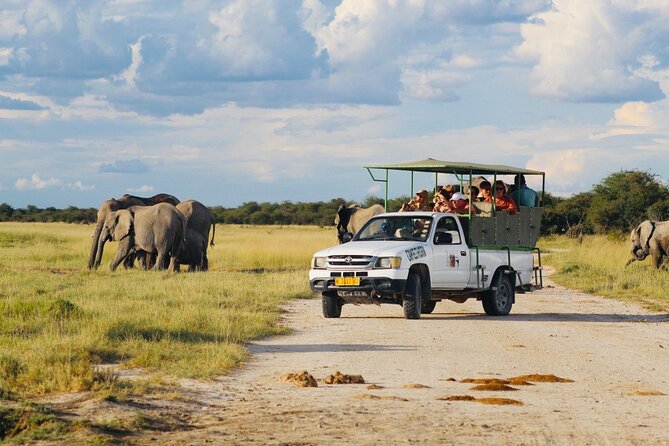
The heart of the safari is the drive between wildlife areas and watering holes. Your guide will look for the Big Four named for this outing: lions, rhinos, leopards, and elephants.
You might also find giraffes, cheetahs, zebras, springbok, kudu, buffalo, squirrels, and many birds. The variety is important. A day should not be judged only by whether a lion appears, since smaller antelope and bird sightings can fill the quieter periods and reveal how much life exists in this dry setting.
The guide’s role is especially important when searching for harder-to-spot animals. Isack helped one group find lions and other less obvious species, while also stopping for roadside discoveries. That suggests a patient approach rather than a simple race from one famous animal to the next.
Still, you must be realistic. One full-day experience produced only two elephants, along with zebras, springbok, and squirrels. That is not a poor safari in biological terms, but it may feel disappointing if your main goal is a long list of large mammals.
This is the central decision point. If you want a guaranteed parade of animals, no Etosha outing can honestly offer that. If you enjoy the search, the changing scenery, and the possibility of a sudden sighting, this format makes more sense.
Choosing between half-day and full-day timing
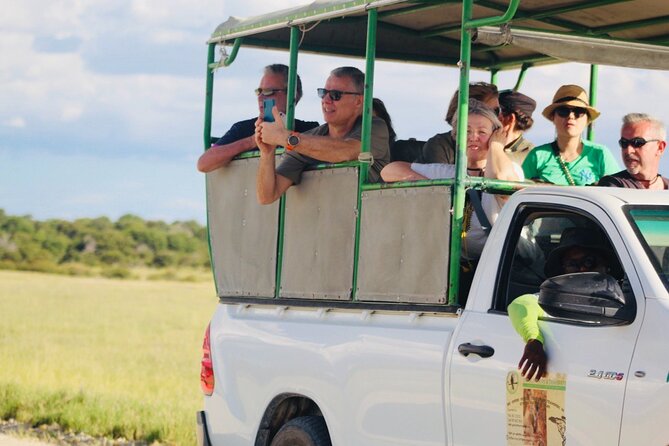
The experience is offered as a half-day or full-day safari, while the main tour information gives an approximate duration of 10 hours. Check the exact option you are booking, since the shorter outing will naturally cover less ground and allow less time at water sources.
A full day gives your guide more chances to visit different parts of the park and wait at promising locations. It also gives you more time for unexpected sightings, which can happen after a quiet morning. The cost is more time in the vehicle, so you should be comfortable with long periods of watching and driving.
A half-day may suit you if you have limited time or prefer a lighter outing. One useful point comes from a half-day trip starting at King Nahale Gate: the group had enough time to stop at Namutoni Restaurant for food. That means you may not need to pack lunch on that particular arrangement, but food is not listed as an included feature, so confirm your plan before setting out.
The full-day option is the better choice for serious wildlife watching. The half-day option is more practical if you are fitting Etosha around other plans and mainly want an introduction to the park.
What the $127.76 price really covers
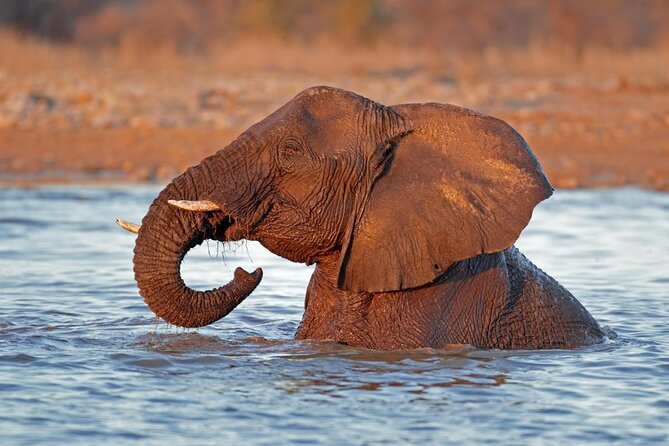
At $127.76 per person, the tour offers a full-day or half-day guided safari, depending on the option selected. The price includes the safari vehicle, guide service, and still or sparkling water.
Park entrance is not included. You pay an additional N$150 per person, so remember to add that fee when comparing the total cost with other Etosha options.
The value is strongest when you want a local guide and organized transport rather than arranging every detail yourself. The small group limit, serviced vehicle, and local guiding give the price practical substance. You are paying for more than a ride through the park. You are paying for someone to search, identify, explain, and respond to what appears beside the road.
The value is less certain if your only measure is the number of large animals photographed. Wildlife sightings vary sharply, and the outing with only two elephants shows why you should not buy this as an animal guarantee.
Water is provided, but meals and park entry are not listed as included. Bring any food you need unless your specific half-day arrangement includes a planned stop at Namutoni Restaurant. That simple check can prevent a hungry afternoon in an open vehicle.
Who will enjoy this Etosha experience
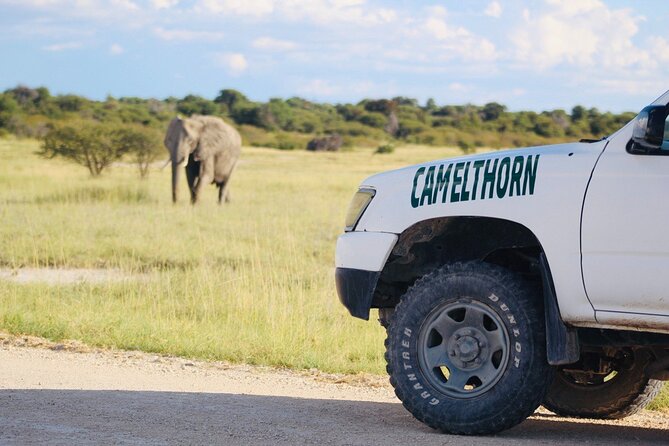
I would recommend this safari to you if you want local guidance, a manageable group, and a serious attempt to find wildlife without paying for a private vehicle. It also suits first-time visitors who want someone else to handle the search while explaining what they see.
Families and mixed-age groups may appreciate the shorter option, although the full day will require patience. People who enjoy birds, smaller animals, and the setting itself will get more from the outing than someone focused only on the Big Four.
Photographers should value the open sides and broad visibility, but should keep expectations sensible. The vehicle helps with sightlines, yet there is no promise that an animal will appear close to the road or remain in the perfect position.
You may want a different arrangement if you dislike long drives with quiet periods. The park is large, and even a well-planned route can produce a modest list of sightings. A private safari could offer more control, but that option is not described here, so compare carefully rather than assuming every vehicle provides the same experience.
Practical details before you book
Confirmation is provided at booking, and the tour has a mobile ticket. The experience is near public transportation, and most people can take part.
The group size is limited to nine, which is a useful middle ground. You get more personal attention than on a large coach, without the cost of a fully private outing.
Morning conditions can be cold. Wear warm layers even if the forecast later turns hot, and use the mini blanket supplied by the operator. Since only water is included, check whether you need to bring food, especially for the full-day option.
The cancellation terms are reasonably flexible. You can receive a full refund if you cancel at least 24 hours before the start time. Changes or cancellations inside that 24-hour window are not accepted for a refund, and the cut-off uses local time. Poor weather can also lead to a different date or a full refund.
Should you book the Yavola Tours safari?
I would book this safari if your priorities are a local guide, a small group, a sound vehicle, and a full day devoted to searching Etosha. Isack and Oscar add real value through their friendly approach, local understanding, and willingness to stop for details beyond the obvious animals.
I would not book it expecting a guaranteed Big Four checklist. Your best day could include cheetahs, elephants, giraffes, zebras, kudu, buffalo, birds, and lions, but another outing may bring only a few larger animals.
Add the N$150 entrance fee, plan for cold early hours, and confirm what food arrangements apply to your chosen duration. If you can accept wildlife watching as a patient search rather than a staged show, this is a solid, locally connected way to experience Etosha.
FAQ
How long does the Etosha safari last?
The main experience is approximately 10 hours, and half-day or full-day options are offered. Check the exact duration when selecting your option.
Are Etosha National Park entrance fees included?
No. The park entrance fee is excluded and is listed as N$150 per person.
How many people can join the tour?
The maximum group size is nine people.
What is included in the tour price?
The tour includes the safari experience with a professional guide, use of the viewing vehicle, and still or sparkling water. Park entry and meals are not included.
Can I see lions, rhinos, leopards, and elephants?
The safari visits wildlife areas and watering holes where these animals may be found, but sightings are not guaranteed.
What happens if bad weather cancels the safari?
You will be offered another date or a full refund if the experience is canceled because of poor weather.
Just added in Namibia
- Windhoek: Township Tour amongst the locals★ 4.0 · 1 review
- Windhoek: Katutura Township Tour with Local Guide★ 3.5 · 3 reviews
- Windhoek: City & Township tour. Vehicle, guide, kapana★ 4.2 · 4 reviews
- Windhoek: Dustenbrook Scenic Game Drive★ 5.0 · 1 review
- Windhoek: Okapuka Game Ranch Guided Tour★ 5.0 · 2 reviews
- Walvisbay: Sandwich Harbour 4×4 & Sandboarding Tours★ 4.8 · 13 reviews
- Windhoek : Cheetah walk Experience★ 4.6 · 8 reviews
- Walvis Bay: Seal Kayaking Adventure with Brunch★ 4.1 · 3 reviews
Etosha Safaris, compared.
ETOSHA PARK SAFARI with local guides in 9-seater 4x4s
Read our review →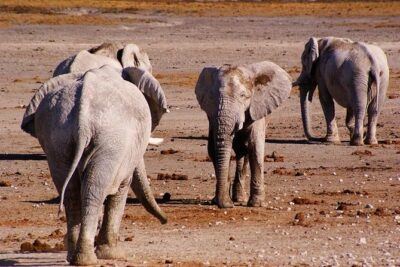
6 Day Sand, Sea & Etosha Budget Camping Safari
Read our review →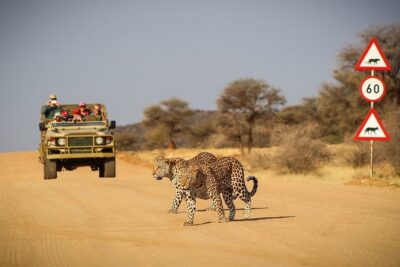
9 Day Etosha, Skeleton Coast and Sossusvlei Camping and Lodge Safari
Read our review →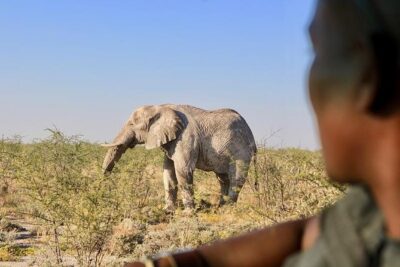
4-Day Etosha And Swakopmund Accommodated Adventure from Windhoek
Read our review →
Browse the lists this tour appears in