
Reviewed · WILDLIFE
6-Day Dunes and Wildlife Accommodated Safari from Windhoek
Namibia packs its best sights into six busy days. This Dunes and Wildlife safari links Etosha’s game drives, the stark Skeleton Coast, and the red dunes of Sossusvlei without asking you to drive yourself across long, rough distances. I especially like the chance to visit Etosha Pan and spend time at floodlit waterholes, then switch completely from wildlife to desert scenery at Dead Vlei and Dune 45. The main drawback is the pace: long hours in the vehicle and a fixed group schedule leave little room for changing plans.
I also like the small-group format, with a maximum of 12 people, and the practical setup of an air-conditioned safari vehicle with a pop-up roof. The guide handles the route, park access, game viewing, and changing scenery while you look out for animals and take photographs. Just know that this is not a relaxed lodge holiday. One low-rated account found the schedule too strict, so independent-minded visitors may find the routine demanding.
In This Review
- Key points at a glance
- What this six-day Namibia route does well
- Day 1: Windhoek to Etosha and the first game drive
- Day 2: Etosha Pan, predators, and Okaukuejo
- Day 3: Damaraland, local communities, and the Zeila wreck
- Day 4: Swakopmund, mountain passes, and desert camp
- Day 5: Dead Vlei, Sossusvlei, and Dune 45
- Day 6: Solitaire and the cheetah conservation visit
- The vehicle, group size, meals, and sleeping arrangements
- Is $2,127.99 a fair price?
- Who should book this safari?
- FAQ
- Where does the safari start and finish?
- What time does pickup begin?
- How many people can join the tour?
- What type of accommodation is included?
- Are meals included?
- Are optional activities included?
- What documents and fitness level are required?
- Should you book it?
Key points at a glance
- Etosha combines game drives with a floodlit waterhole, giving you wildlife viewing by day and after dinner.
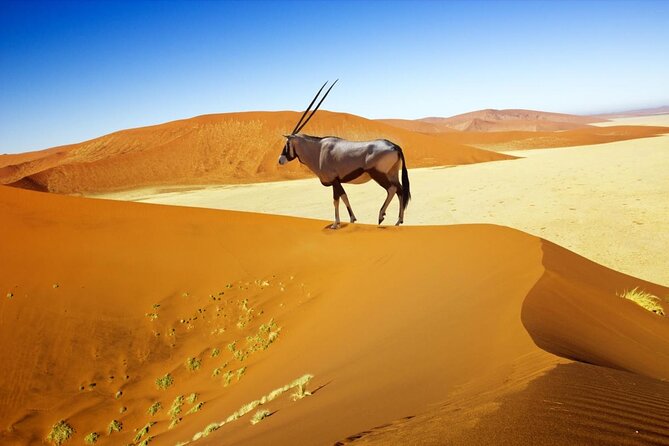
- Dead Vlei and Big Daddy provide Namibia’s most dramatic desert views, with cracked white clay, dead trees, and giant dunes.
- The Skeleton Coast section includes the Zeila shipwreck, plus contact with Herero, Damara, and Himba communities.
- The route covers huge distances, especially on Day 3, so expect long vehicle hours and early starts.
- A cheetah conservation visit near Solitaire offers a close look at animals that cannot be released.
- The $2,127.99 price includes five nights, meals, park activities, transport, and a guide, but drinks and optional activities cost extra.
What this six-day Namibia route does well
At 4.9 out of 5 from 123 ratings, with 98 percent recommending it, this trip has a strong record. The praise centers on the amount of Namibia packed into less than a week, the clear pre-trip information, punctual pickup, comfortable accommodation, and guides who keep working from early morning through the evening.
That combination matters. Namibia is vast, and the distances between Windhoek, Etosha, Swakopmund, the coast, and the Namib Desert are not easy to manage on your own if you have only six days. Here, the driver and guide take care of the long transfers, park entrances, safari vehicle, and timing.
You should still set your expectations correctly. This is a group safari with a set program, not a private trip. The daily schedule is designed to keep the route moving, so you may not be able to linger at every stop or choose your own departure time.
The accommodation uses twin-share rooms with en-suite bathrooms. That is a practical middle ground: more comfortable than basic camping, but not a luxury safari arrangement. Four dinners, five lunches, and five breakfasts are included, along with tap water. You will need to budget for soft drinks, alcohol, bottled water if preferred, snacks, and optional activities.
More safaris in Windhoek:
- 12 Day Classic Namibia Camping Safari
★ 5.0 · 77 reviews - 3 Day Sossusvlei Budget Camping Safari
★ 5.0 · 62 reviews - 6 Day Sand, Sea & Etosha Budget Camping Safari
★ 5.0 · 36 reviews
Day 1: Windhoek to Etosha and the first game drive
Pickup begins around 7:00 to 7:15 a.m. at the Chameleon Safaris office on Ferry Street in Windhoek. City pickup and drop-off are included, but airport transfers are not, so plan that part separately.
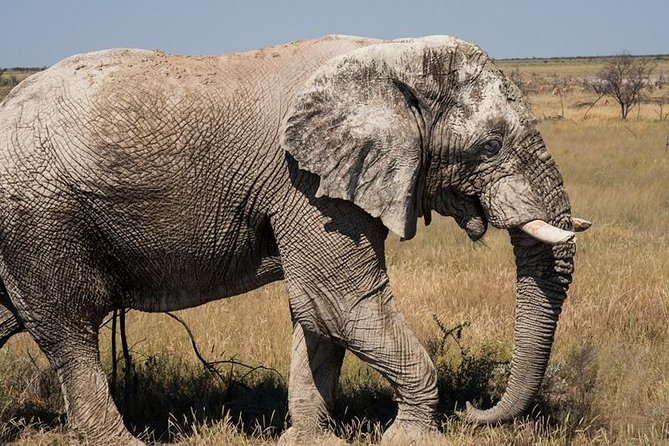
The first day is mainly a transfer north toward Etosha National Park. You reach Anderson Gate at about 2:00 p.m., then spend the afternoon driving through the park toward Halali. This timing gives you a useful first wildlife outing rather than using the whole day simply to reach your room.
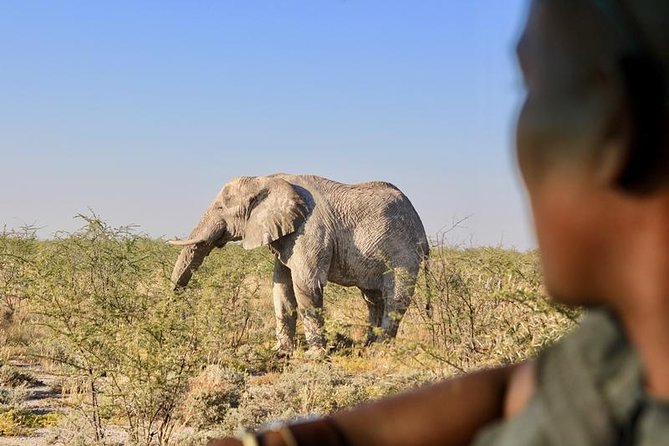
Etosha is known for its dry setting and open salt-pan country, where animals gather around water. From a pop-up roof vehicle, you have a good position for viewing and photographs, though sightings can never be promised. The guide’s experience matters here because finding animals depends on patience, timing, and knowing where to look.
You stay at Halali in a twin-share room. The most useful tip for the evening is to visit the floodlit waterhole before and after dinner. It gives you another chance to watch wildlife without returning to the vehicle, and it adds a different mood to the first night.
The day is long, so do not expect much free time after arrival. Bring a small bag with essentials in the vehicle, including sun protection and something warm for early or late hours.
Day 2: Etosha Pan, predators, and Okaukuejo
Day 2 is the main Etosha day. A morning game drive searches for predators, followed by another drive toward Etosha Pan. The pan is the feature that gives the park its name, a vast, pale expanse that changes the feel of the park from ordinary game reserve to something much larger and stranger.
The pan is also described as a mass breeding area for flamingos. Conditions affect what you see, so bird numbers can vary, but the stop adds an important bird-watching element to a morning otherwise focused on larger animals.
After more game driving, you stop at Okaukuejo. This is a practical break where you can stretch your legs, use the bathroom, buy a cold drink, and climb the tower. That pause may sound minor, but after hours in a safari vehicle, it is welcome.
You leave the park shortly before sunset and continue to Etosha Village for the night. In total, this is a full day outdoors with a lot of time spent watching the roadside. You will enjoy it most if you are comfortable with patience. Safari viewing is not a parade of constant sightings, and the reward comes from staying alert.
The first two days are also where the trip earns much of its wildlife value. You receive one afternoon game drive and one full day of game driving as part of the package, rather than only stopping briefly at the park on the way to the desert.
Day 3: Damaraland, local communities, and the Zeila wreck
Day 3 is the toughest day in terms of vehicle time. You travel through rural Namibia and Damaraland toward the coast, with a roadside lunch along the way. The distances are large, and this is the day when the fixed route feels most strongly.
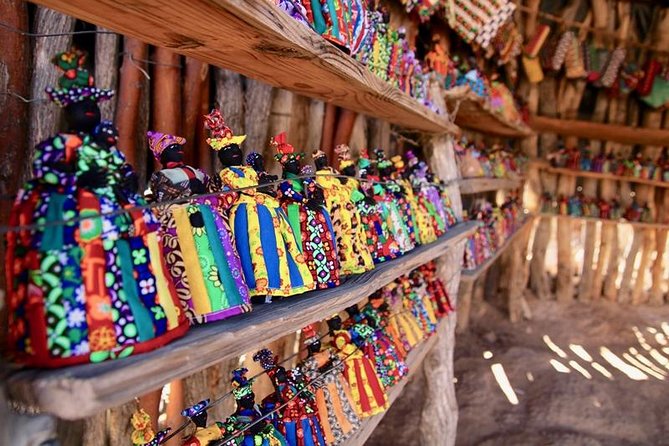
The cultural stops offer a welcome change from wildlife viewing. You have the chance to meet Herero, Damara, and Himba people, including a one-hour Himba village experience. Small markets provide an opportunity to buy local goods and support community sellers.
Keep your approach respectful and open. These stops are not simply quick photo opportunities. They give you a chance to see how local people present their work and interact with visitors, while also making your purchases more meaningful.
The day ends with the Zeila shipwreck on the Skeleton Coast. The wreck fits the coast’s stark reputation: a stranded vessel against an empty, wind-shaped setting. It is a short stop compared with the time spent getting there, but it gives the route a strong visual change after Etosha’s animals and waterholes.
You then reach Swakopmund and check into your accommodation. This is your best chance to walk around town and choose where to eat, although dinner arrangements and the day’s timing may limit your freedom. One advantage of stopping here is the contrast between rural Namibia and a more settled coastal town.
More wildlife trips in Windhoek:
- 9 Day Canyons, Dunes & Wildlife Camping and Lodge Safari
★ 4.5 · 23 reviews - 6- Day Wildlife, Oceans & Dunes
★ 5.0 · 1 review - Swakopmund: Little Five Desert Wildlife Quad Biking Tour
★ 4.8 · 123 reviews - Wildlife and Landscape Tour- full-day (7hours) from Walvis Bay
★ 5.0 · 5 reviews
Day 4: Swakopmund, mountain passes, and desert camp
The morning in Swakopmund includes an optional activity. Sandboarding is specifically offered as a possible choice, taking you into the coastal dune fields. Because optional activities are not included in the tour price, ask about the cost and timing before committing.
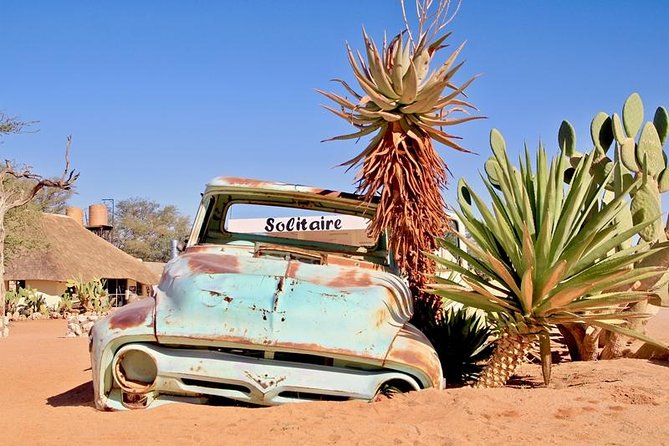
You leave Swakopmund at about 11:15 a.m. after a short pre-departure talk. The road then crosses Kuiseb Pass and Gaub Pass, continues toward Solitaire, and reaches camp late in the afternoon.
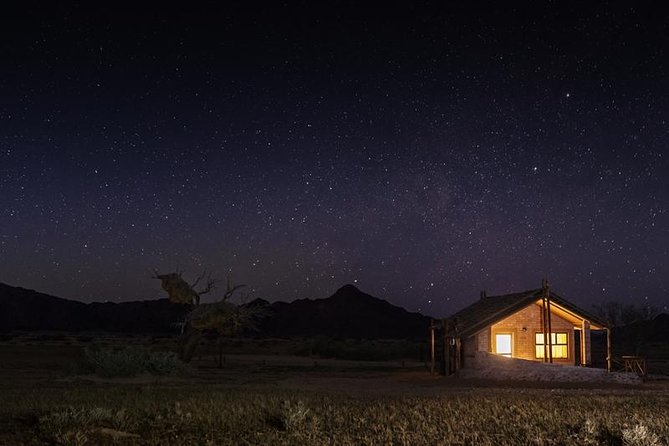
This section is about changing scenery rather than a single major attraction. The coast gives way to dry mountain country and then to the Namib Desert. At camp, you have time to relax and enjoy the views before a short sunset walk overlooking the Naukluft Mountain range.
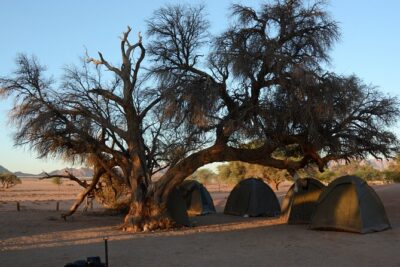
The included Desert Camp night places you well for the next morning’s early visit to Sossusvlei. That location is one of the trip’s practical strengths. You avoid wasting the next day on a long approach from far away, although you still need to accept an early departure.
This is also a good point to manage your energy. Sandboarding, long road transfers, and a dawn start can add up quickly. If you want to climb Big Daddy the next day, take the evening quietly.
Day 5: Dead Vlei, Sossusvlei, and Dune 45
Day 5 is the photographic high point for many people. You leave at dawn and aim to reach the park gate around sunrise. From there, the route follows an ancient river bed surrounded by tall dunes for roughly 55 kilometers to a 2×4 parking area.
A 4×4 shuttle takes you into the Sossusvlei area. That transfer is important because the final approach is not handled by the main safari vehicle. Once there, you explore on foot.
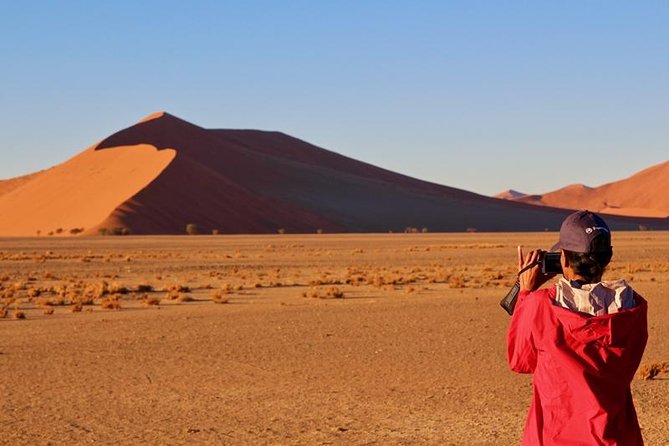
Dead Vlei is the most distinctive stop: a broad field of bleached, cracked clay with skeletal camel thorn trees, framed by huge dunes whose colors shift with the light. The contrast is unusually stark. Arriving early gives you the best chance of seeing the area in cooler conditions and softer morning light.
You have about two hours at Dead Vlei. If you have the strength, you can climb Big Daddy, the highest dune in the area, for broad views over the Namib Desert. The climb is optional in practice, even though the stop is part of the day. It is physically demanding, so sturdy footwear, water, and a realistic sense of your fitness will help.
From Dead Vlei, you continue to Sossusvlei for another two hours of exploration before brunch. The name refers to a clay and salt pan, and its wide open setting provides a different view from Dead Vlei’s concentrated group of trees.
On the return route, you stop at Dune 45 for photographs. This is one of the most recognized dunes in the region and a good place to see how the desert’s curves catch the light. You then visit Sesriem Canyon, where you can climb down into the narrow geological formation. The canyon was once a source of permanent water for local wildlife.
The day is full but well organized around the desert’s best-known sights. The tradeoff is that there is little spare time. If you want long photo sessions, a major dune climb, and a relaxed canyon visit, you may need to choose your priorities.
Day 6: Solitaire and the cheetah conservation visit
The final morning starts with breakfast before heading to Solitaire. There, an open vehicle takes you to a local conservation project with cheetahs that cannot be released for different reasons.
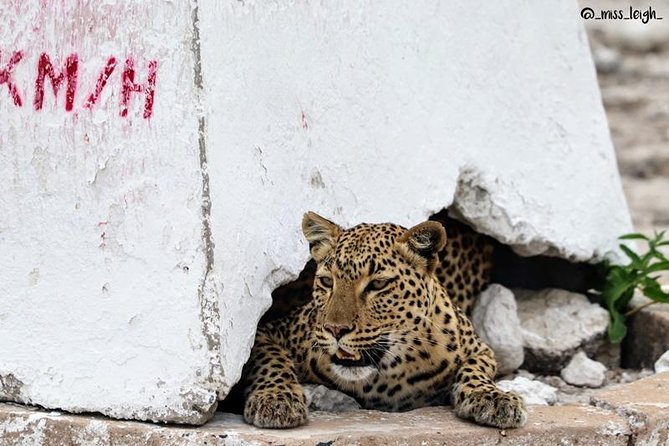
The one-hour activity focuses on learning about cheetahs, the conservation work, and photography. It is not presented as a wild predator sighting. Instead, it gives you a closer look at the challenges faced by animals that are not able to return to the wild.
This is a thoughtful way to finish the safari because it connects the trip’s wildlife focus with conservation work. You have already searched for animals in Etosha, and now you learn about a specific project caring for cheetahs under human protection.
Afterward, the activity ends back at the Windhoek meeting point. The provided schedule does not give a precise arrival time, so avoid booking a tightly timed onward connection that same day.
The vehicle, group size, meals, and sleeping arrangements
The custom-built, air-conditioned safari vehicle has a pop-up roof, which is designed for game viewing and photography. You will spend many hours inside it, especially on Day 3, so the small maximum group of 12 makes a meaningful difference.
The included meals cover most of the basic food needs: four dinners, five lunches, and five breakfasts. Tap water is included, while other drinks are not. Bring or buy snacks as needed, since snacks are excluded and long transfers can make regular meal times feel far away.
Twin-share rooms with en-suite bathrooms are included for all five nights. If you do not want to share, check the available arrangements before booking. The child rate applies only when a child shares with two paying adults, and children must be accompanied by an adult.
A moderate level of physical fitness is advised. You may need to climb down into Sesriem Canyon, walk across sandy areas, and possibly climb Big Daddy. You should also be ready for early starts, long vehicle days, and changes in temperature between desert mornings and warmer daytime hours.
Is $2,127.99 a fair price?
At $2,127.99 per person, this is not a budget bus trip. But the price includes five nights of accommodation, transport from Windhoek and back, a professional English-speaking driver and guide, park activities, game drives, the Himba village experience, the Sossusvlei day, the cheetah visit, and most meals.
You are paying for access to a difficult route without having to arrange a rental vehicle, navigation, park permits, lodging, and transfers yourself. Namibia’s distances make that service valuable, especially if you do not want to drive long stretches on unfamiliar roads.
The value is strongest for a first visit when you want the major sights in one compact trip. It is weaker if you prefer slow mornings, private guiding, luxury accommodation, or the freedom to skip stops.
The tour is commonly booked well ahead, on average about 104 days in advance. That suggests you should not leave planning until the last moment, particularly if your dates are fixed. The booking is non-refundable and cannot be changed, so confirm your schedule, passport, dietary requirements, and accommodation expectations before paying.
Who should book this safari?
I would recommend it to you if you have about a week, want Etosha and Sossusvlei in the same trip, and would rather let a guide handle the driving. It also suits photographers who want strong visual variety: animals and waterholes, the Etosha Pan, a shipwreck, coastal sand, red dunes, Dead Vlei, and cheetahs.
It is a good choice for active visitors who can manage early starts and moderate walking. The small group and included meals make the trip simpler without pushing it into luxury pricing.
I would hesitate if you dislike fixed schedules or long transfers. One dissatisfied participant found the tour too regimented and felt the guide did not adapt enough to different preferences. That criticism is important because the very structure that makes the route possible can also make it feel strict.
FAQ
Where does the safari start and finish?
The trip starts at the Chameleon Safaris office on Ferry Street in Windhoek, with pickup available within Windhoek city limits. It ends back at the meeting point.
What time does pickup begin?
The stated start time is 7:00 a.m., while the first-day pickup information gives approximately 7:15 a.m. You should confirm the exact pickup time before departure.
How many people can join the tour?
The maximum group size is 12 people.
What type of accommodation is included?
Five nights are included in twin-share rooms with en-suite bathrooms, staying at the places listed for each night, including Halali, Etosha Village, Swakopmund accommodation, and Desert Camp.
Are meals included?
Breakfast is included five times, lunch five times, and dinner four times. Drinks other than tap water and snacks are not included.
Are optional activities included?
No. Optional activities, such as sandboarding from Swakopmund, are not included in the tour price.
What documents and fitness level are required?
You need a current valid passport on the day of travel. A moderate level of physical fitness is recommended, particularly for walking in sandy areas, climbing Big Daddy if you choose to do so, and entering Sesriem Canyon.
Should you book it?
Book this safari if your priority is seeing a lot of Namibia efficiently. The route gives you a strong mix of wildlife, desert, coast, local culture, and conservation, with transport and most meals handled for you.
Skip it if you need a flexible private itinerary or dislike long days in a vehicle. For the right person, the $2,127.99 cost is reasonable for the distance covered and the number of major sights included. Just arrive ready for early mornings, shared rooms, and a firm schedule, and this can be a very rewarding first look at Namibia.
Just added in Windhoek
- Windhoek: Katutura Township Tour with Local Guide★ 3.5 · 3 reviews
- Windhoek: City & Township tour. Vehicle, guide, kapana★ 4.2 · 4 reviews
- Windhoek: Dustenbrook Scenic Game Drive★ 5.0 · 1 review
- Windhoek: Okapuka Game Ranch Guided Tour★ 5.0 · 2 reviews
- Windhoek : Cheetah walk Experience★ 4.6 · 8 reviews
- Windhoek City and Township Tour★ 5.0 · 1 review
- 10-Day Private Yoga Adventure in Namibia★ 5.0 · 7 reviews
- Namibia Express Safari – 6 Days★ 5.0 · 1 review
Wildlife, compared.
9 Day Canyons, Dunes & Wildlife Camping and Lodge Safari
Read our review →
Wildlife and Landscape Tour- full-day (7hours) from Walvis Bay
Read our review →
Browse the lists this tour appears in