
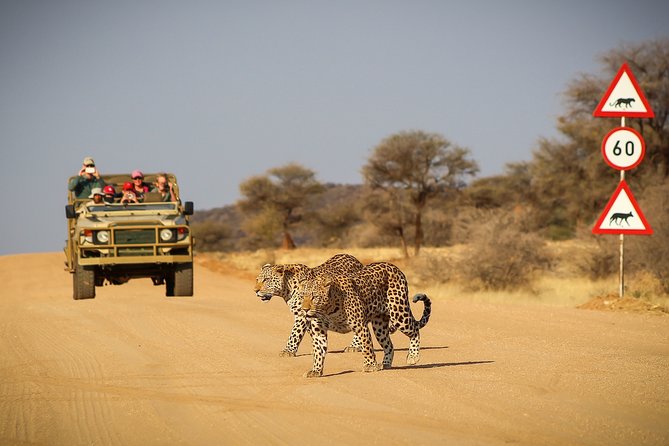
Reviewed · SOSSUSVLEI AND THE NAMIB DUNES
9 Day Etosha, Skeleton Coast and Sossusvlei Camping and Lodge Safari
Namibia packs a lot into nine days. This Chameleon Safaris trip links Etosha wildlife with the stark Skeleton Coast, Himba culture, Swakopmund and the giant dunes of Sossusvlei. I like the clever mix of five camping nights and three nights in accommodation, and I like that meals, park visits, camping gear and a pop-up-roof safari vehicle are included. The main drawback is the pace: you cover huge distances, rise early, and spend long hours on the road.
I also like the small maximum group size of 10. That matters in a safari vehicle, where every seat affects your view and your comfort. Past guides such as Kennedy, Taimi, Smith-Lee, Gregory and Gideon have been praised for cooking, organization, humor and care. Still, this is an active trip, not a relaxed resort holiday, and the non-refundable booking policy means you should be sure before paying.
In This Review
- Six details that define this Namibia safari
- Windhoek to Mount Etjo: an easy start with a conservation focus
- Two days in Etosha, from waterholes to the white pan
- Otjikandero and the long road toward the Atlantic
- Skeleton Coast and Cape Cross: fog, wrecks and a wall of seals
- Swakopmund gives you choice and a needed pause
- Deadvlei and Sossusvlei: Namibia’s great visual payoff
- The final morning and return to Windhoek
- Camping, food and daily comfort
- Is the $2,568.47 price good value?
- Who should book this trip?
- Should you book the 9 Day Namibia safari?
- FAQ
- Where does the tour start and finish?
- Is pickup available?
- How many people can join the tour?
- How many nights are spent camping?
- Is camping equipment provided?
- Are meals included?
- Are drinks and snacks included?
- Are optional Swakopmund activities included?
Six details that define this Namibia safari
- Etosha is the wildlife core: You get an afternoon game drive, a full day crossing the park, and a final morning drive.
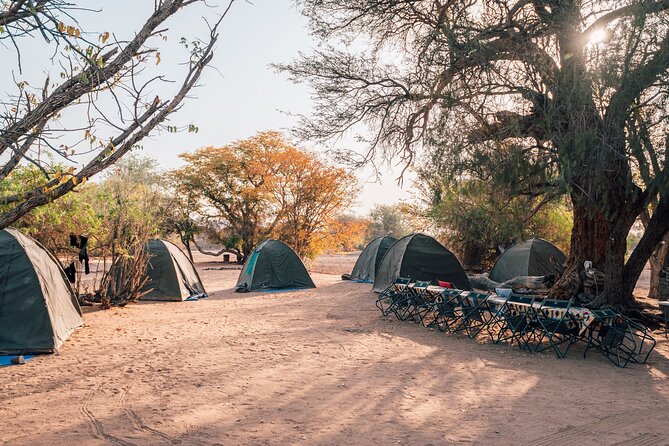
- Five nights under canvas: Camping equipment and cooking are supplied, but you need to bring your own sleeping bag.
- Himba village visit: Otjikandero offers a guided look at traditional Himba life and customs.
- Skeleton Coast access: Cape Cross, the Zeila shipwreck and the foggy Atlantic shore add a very different mood to the safari.
- Sossusvlei gets a full day: Deadvlei, Sossusvlei, Dune 45 and Sesriem Canyon are all included.
- Swakopmund gives you a break: You get free time for optional activities such as sandboarding, quad biking, skydiving or a bicycle tour.
Windhoek to Mount Etjo: an easy start with a conservation focus
The tour begins at Chameleon Safaris on Ferry Street in Windhoek at 7:00 a.m. A short pre-departure talk at Chameleon Backpackers gives you the chance to meet the group, hear the plan and settle into the safari vehicle.
The first stop is the Okahandja Mbangura Woodcarvers Craft Market. You have about an hour to browse carvings and practice bargaining. This is more than a routine souvenir stop. The market brings together woodcarvers from across Namibia, and buying directly supports local craftspeople. Keep your purchase practical, since you will still be carrying your luggage for several days.
Mount Etjo Game Reserve is the first major stop. The reserve works to support conservation, with particular attention to Namibia’s black and white rhinos. You aim to arrive before lunch, set up camp and then join an afternoon game drive.
The focus here is rhino, especially animals connected with the Mount Etjo Rhino Trust. The drive ends with a Namibian sunset, a fitting introduction to the open country ahead. Your guide prepares dinner over an open fire, which becomes a recurring feature of the trip.
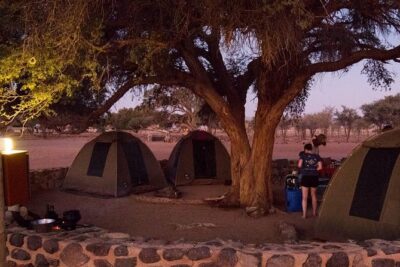
The first night also tells you what the camping side of the safari involves. You help set up camp rather than simply arriving at a finished hotel room. That is part of the appeal, but it also means you should be comfortable with basic outdoor routines.
More Sossusvlei and dune trips:
- 3 Day Sossusvlei Budget Camping Safari
★ 5.0 · 62 reviews - 7 Day Southern Namibia and Sossusvlei Camping Safari
★ 5.0 · 26 reviews - 4-Day Swakopmund And Sossusvlei Accommodated Adventure from Windhoek
★ 4.5 · 21 reviews
Two days in Etosha, from waterholes to the white pan
On Day 2, you stop in Otjiwarongo to collect fresh supplies before reaching Etosha National Park. Once inside, the safari vehicle moves from waterhole to waterhole, looking for predators, plains animals, birds and, with luck, reptiles.
Etosha works differently from a forested safari park. The open terrain can make animals easier to spot, while waterholes concentrate activity. You may see plains game and birds during the drives, and the itinerary specifically highlights the possibility of lion, hyena, elephant, giraffe and rhino.
The route leads to Okaukuejo, where you set up camp and eat lunch before the afternoon drive. After returning near sunset, you can visit Okaukuejo’s floodlit waterhole while dinner cooks. This is one of the strongest features of the camping arrangement. You are not simply sleeping beside the park. You have access to a place where animals often come after dark.
The next morning begins at sunrise. You drive across Etosha, stopping at waterholes and eating breakfast at a fenced picnic site inside the park. The early start is worthwhile because predators may still be active, but do not expect a slow morning. The schedule keeps moving.
The Etosha Pan is the visual centerpiece. Its name means great white place, and the enormous saline desert covers about 4,500 square kilometers. You can get out of the vehicle here, which gives you a welcome change from sitting and scanning through windows.
At Halali, the central camp, you have time for lunch, a pool visit and the Moringa Waterhole. Then you drive back toward Okaukuejo, stopping at more waterholes before reaching camp around sunset.
The final Etosha morning brings another early breakfast and a sunrise drive while exiting the park. Three separate wildlife periods give you a fair chance to see a good range of animals, but a safari never guarantees sightings. The value is in the repeated time spent in the right habitat, not in a promised checklist.
Otjikandero and the long road toward the Atlantic
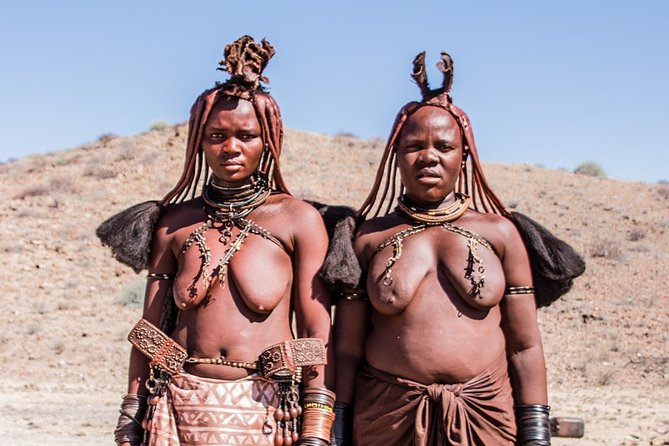
After leaving Etosha, the tour visits Otjikandero Himba Orphan Village. A guided two-hour visit introduces you to Himba customs, daily life and traditional culture. The stated purpose is an exchange, not just a quick photo stop, and you have the chance to share something about your own culture too.
This is an important change of focus after two days built around wildlife. You are meeting people and learning about a living community, not viewing Namibia only through a vehicle window. Approach the visit with respect, listen to the guide and remember that this is someone’s culture and home.
The day continues to Palmwag Campsite. There is time to rest, and you might spot a desert elephant if luck is on your side. The possibility is exciting, but it is only a possibility. Dinner again comes from the guide’s open-fire kitchen.
This is one of the trip’s longer transit sections. Namibia is vast, and reaching the Atlantic requires road time. If you dislike long drives, this itinerary may feel demanding. If you enjoy watching the scenery change from savanna to dry rocky country, the journey becomes part of the experience.
Skeleton Coast and Cape Cross: fog, wrecks and a wall of seals
Day 5 carries you west through Skeleton Coast National Park to Cape Cross. The coast is known for fog, rough seas, unpredictable currents and shipwrecks. It feels severe and remote, a sharp contrast to Etosha’s animal-filled waterholes.
You arrive at Cape Cross late in the afternoon, set up camp and watch the sun drop over the Atlantic. Coastal weather can make this camping night feel very different from the dry inland camps. Bring warm layers, since the itinerary specifically warns you to expect the coastline’s climate in full force.
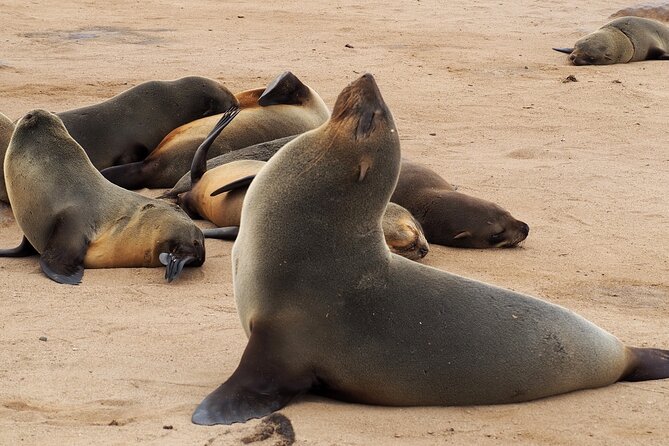
The following morning includes a cooked breakfast and a short walk to Cape Cross Seal Reserve. This is one of the most memorable stops on the route. Cape fur seals gather here in huge numbers, and during the November to December breeding season, more than 200,000 may be present.
It is an impressive sight, but also an intense one. The colony is noisy and has a strong smell. That is not a complaint so much as a useful warning. Cape Cross is nature without a filter, and you should be ready for the full sensory experience.
You then stop at the Zeila shipwreck, one of the newer wrecks on this coast, dating from 2007. It gives the Skeleton Coast story a recent human detail. Afterward, the road leads to Swakopmund, where the trip shifts from remote camping to town comforts.
More Etosha safaris:
- 6 Day Sand, Sea & Etosha Budget Camping Safari
★ 5.0 · 36 reviews - 4-Day Etosha And Swakopmund Accommodated Adventure from Windhoek
★ 4.5 · 19 reviews - Etosha Express Safari 3 Days / 2 Nights
★ 5.0 · 11 reviews - 3 Day Camping tour at Etosha National Park
★ 5.0 · 5 reviews
Swakopmund gives you choice and a needed pause
You arrive in Swakopmund in the early afternoon and have time to walk around town or book an optional activity. Options listed for this break include skydiving, quad biking, sandboarding and a bicycle tour through the old city.
The free time is valuable because the first six days are tightly scheduled. You can use it for an adrenaline activity, or simply enjoy a proper restaurant meal and a slower evening. Dinner is not included in Swakopmund, so budget for it separately. Your guide can recommend or book a restaurant.
Day 7 keeps the morning open, with departure at 11:30 a.m. That lets you fit in an optional activity before heading south. Sandboarding, for example, sends you down a dune head first at high speed, while quad biking offers a faster way to see the dune field.
Do not book an activity that leaves you cutting the departure time close. The tour has a fixed onward schedule, and a late return would create an avoidable problem.
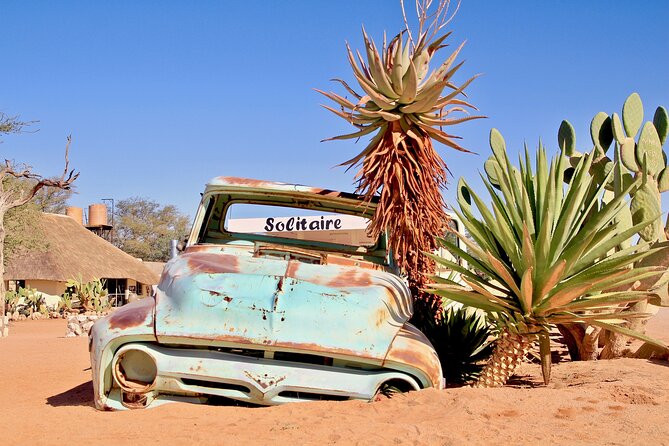
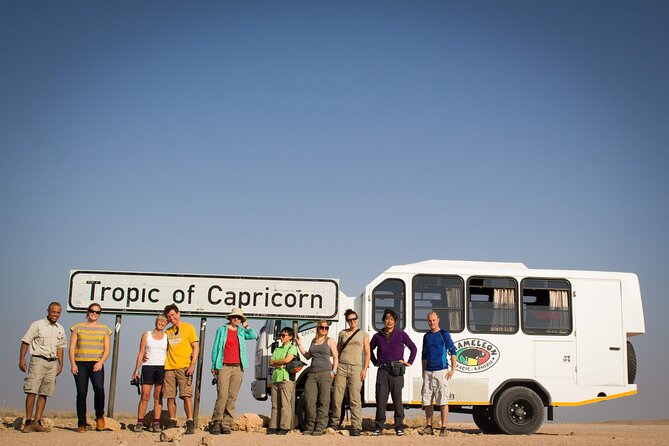
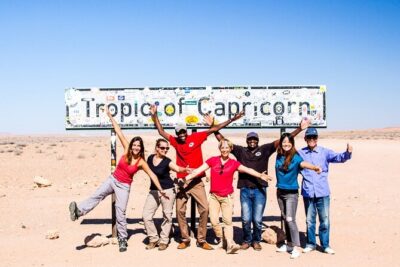
The afternoon includes brief stops at the Tropic of Capricorn sign and Solitaire. The first is mainly a photo and leg-stretch stop. Solitaire is a useful break for a bathroom visit, drink and snack.
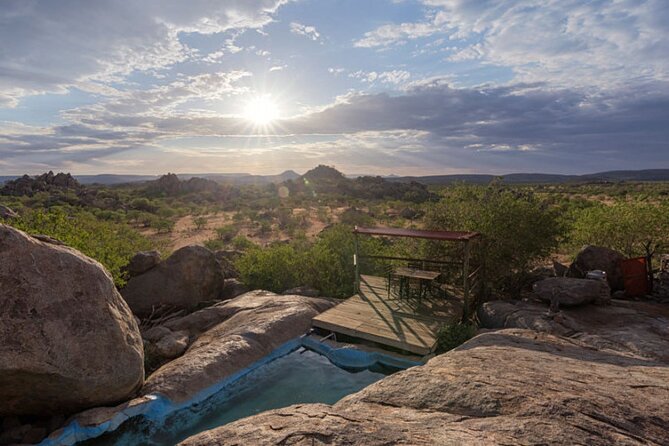
You arrive at Desert Camp late in the day, settle into your rooms and take a short walk for sunset. Dinner is prepared by your guide. This accommodation break is well placed after several camping nights and long drives.
Deadvlei and Sossusvlei: Namibia’s great visual payoff
Day 8 is dedicated to the Sossusvlei area, and you start with the 4×4 parking area for the trip to Deadvlei. The change to a 4×4 is important because the final approach is handled separately from the main safari vehicle.
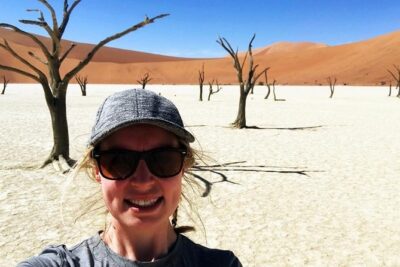
Deadvlei is known for its stark, dry setting and old trees, while Sossusvlei brings the huge red dunes and broad desert views. You have three hours at Deadvlei and two hours at Sossusvlei, enough time to walk, photograph and take in the scale without treating the area as a quick roadside stop.
The heat and walking make this one of the more physically demanding days. The tour asks for a moderate fitness level, and that matters here. Wear suitable walking shoes, carry water and protect yourself from the sun. Tap water is supplied on the tour, but drinks and snacks are not included.
After brunch at Sossusvlei, the group stops at Dune 45 for photographs. The final major stop is Sesriem Canyon, a small but important water source for local wildlife. These stops work well together: Deadvlei offers stark detail, Sossusvlei gives you the broad desert setting, Dune 45 is the classic dune view and Sesriem adds geology and water to the day.
The final morning and return to Windhoek
On Day 9, you stop at the Solitaire Carnivore Conservation project for an hour focused on cheetahs. This gives the final morning a wildlife theme, though in a different setting from the national park game drives.
The route then returns to Windhoek through the Naukluft Mountains and Rehoboth, arriving in the early afternoon. Do not schedule a flight for this day. The listed advice is clear, and road conditions or timing changes could make an early departure risky.
Pickup and drop-off are offered within Windhoek city limits, with return airport transfers included. The tour begins and ends at the Chameleon Safaris meeting point, so check that your accommodation fits the stated pickup area.
Camping, food and daily comfort
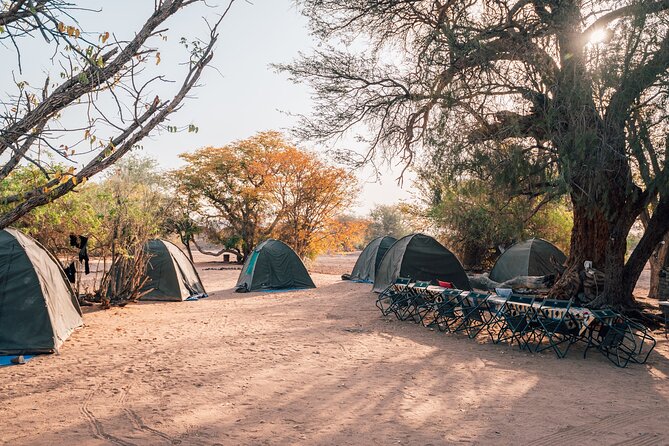
The package includes five nights camping and three nights in accommodation on a twin-share basis. Camping equipment is provided, but sleeping bags are not. That is an easy item to miss, so arrange one before departure.
Breakfast is included on eight days, while lunch and dinner are included on seven days. Drinks, bottled mineral water, soft drinks, alcohol and snacks cost extra. Tap water is supplied, but you may still want to budget for other drinks and carry snacks for the long drives.
The guides do much of the cooking, usually over an open fire. This has become one of the tour’s most praised features. Kennedy and Smith-Lee are specifically associated with good meals, while Smithley is praised as a strong camp cook. Guides such as Gregory, Gideon, Taimi and Tulimo have also been singled out for humor, energy, organization and personal attention.
The safari vehicle is custom-built with a pop-up roof. That gives you a better viewing position on game drives and helps you see above the surrounding brush. The group maximum is 10, though actual departures may be smaller. One group of six was described as especially comfortable, which makes sense in a vehicle where space affects everyone.
Is the $2,568.47 price good value?
At $2,568.47 per person, this is not a bargain-basement camping trip. It is good value if you compare what is bundled into the price: eight nights of lodging or camping, transport across a large part of Namibia, a professional English-speaking guide, camping equipment, park access items listed in the itinerary, most meals, airport transfers and the major sights.
You would pay separately for optional Swakopmund activities, dinner in Swakopmund, drinks, snacks, insurance and a sleeping bag. Those extras can add up, especially if you choose skydiving or several adventure activities.
The value is strongest for someone who wants Namibia’s main highlights in one organized route and does not want to arrange vehicles, campsites, park visits and meals independently. It is less attractive if you want private guiding, high-end lodges, slower mornings or complete control over the schedule.
The tour has a five-star rating from 21 reviews and a 100 percent recommendation figure. The repeated praise centers on smooth organization, capable guides, fresh food, good camp equipment and the range of scenery. That does not remove the normal risks of a group safari, but it points to a consistently well-run operation.
Who should book this trip?
I would choose this tour if you want wildlife, desert scenery, local culture and coastal wilderness in one compact trip. It suits first-time campers because equipment and food are handled for you, while the lodge nights provide a break from sleeping outdoors.
You should be ready for early starts, long drives, changing temperatures, shared rooms and a moderate level of physical activity. This is also a good fit for solo travelers who want a small group and built-in company.
I would look elsewhere if you need a gentle pace, luxury accommodation every night or a flexible private itinerary. The non-refundable policy also deserves serious attention. Buy travel insurance, confirm your dates and make sure the camping arrangement suits you before booking.
Should you book the 9 Day Namibia safari?
Book it if your priority is variety. In nine days, you get rhino conservation at Mount Etjo, repeated wildlife drives in Etosha, a Himba village visit, the severe beauty of the Skeleton Coast, Cape Cross seals, Swakopmund activities and the dunes of Sossusvlei.
The best reason to go is the range packed into one route, supported by guides who also cook, drive and manage camp. The main price is time: Namibia’s distances mean some days are long, and the schedule leaves little room for error.
For an affordable first look at Namibia with a practical mix of camping and accommodation, this is a strong choice. Pack a sleeping bag, warm coastal clothing, sun protection, snacks and patience for the road, and you will be set up to enjoy the ride.
FAQ
Where does the tour start and finish?
The tour starts at Chameleon Safaris on Ferry Street in Windhoek at 7:00 a.m. It ends back at the same meeting point in Windhoek.
Is pickup available?
Yes. Pickup and drop-off are offered within Windhoek city limits, and return airport transfers are included.
How many people can join the tour?
The maximum group size is 10 people.
How many nights are spent camping?
The package includes five nights camping and three nights in accommodation, with lodging arranged on a twin-share basis.
Is camping equipment provided?
Yes. Camping equipment is included, but you must bring or arrange your own sleeping bag.
Are meals included?
Breakfast is included on eight days. Lunch and dinner are included on seven days. Dinner in Swakopmund is at your own expense.
Are drinks and snacks included?
No. Drinks, including mineral water, soft drinks and alcohol, are not included. Snacks are also extra, although tap water is supplied.
Are optional Swakopmund activities included?
No. Activities such as skydiving, quad biking, sandboarding and bicycle tours are optional and cost extra.
More Safaris in Windhoek
- 6-Day Dunes and Wildlife Accommodated Safari from Windhoek
★ 5.0 · 123 reviews - 12 Day Classic Namibia Camping Safari
★ 5.0 · 77 reviews - Scenic Game Drive Activity
★ 4.5 · 31 reviews - 9 Day Canyons, Dunes & Wildlife Camping and Lodge Safari
★ 4.5 · 23 reviews
Just added in Windhoek
- Windhoek: Katutura Township Tour with Local Guide★ 3.5 · 3 reviews
- Windhoek: City & Township tour. Vehicle, guide, kapana★ 4.2 · 4 reviews
- Windhoek: Dustenbrook Scenic Game Drive★ 5.0 · 1 review
- Windhoek: Okapuka Game Ranch Guided Tour★ 5.0 · 2 reviews
- Windhoek : Cheetah walk Experience★ 4.6 · 8 reviews
- Windhoek City and Township Tour★ 5.0 · 1 review
- 10-Day Private Yoga Adventure in Namibia★ 5.0 · 7 reviews
- Namibia Express Safari – 6 Days★ 5.0 · 1 review
Sossusvlei and the Namib Dunes, compared.
7 Day Southern Namibia and Sossusvlei Camping Safari
Read our review →
4-Day Swakopmund And Sossusvlei Accommodated Adventure from Windhoek
Read our review →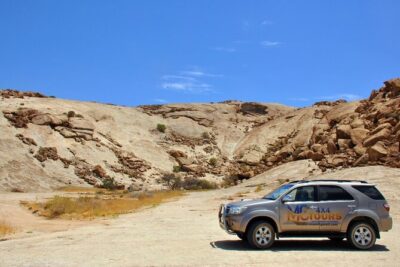
3-Day Sossusvlei Express Accommodated Safari from Swakopmund
Read our review →
Cruise liner Special: Swakopmund and Namib Desert Highlights
Read our review →
5-Day Sossusvlei & Sandwich Harbour Photography Tour
Read our review →
NAMIB DESERT TOURS, Full-Day and Half-Day Tours from Swakopmund, Namibia
Read our review →Browse the lists this tour appears in