
Reviewed · SOSSUSVLEI AND THE NAMIB DUNES
Cruise liner Special: Swakopmund and Namib Desert Highlights
Desert, sea, and strange old plants fill one long day. This Walvis Bay shore excursion gives you a broad look at Namibia’s coast, from the German-era streets of Swakopmund to the stark gravel plains, Moon Landscape, Goanikontes oasis, Welwitschia plants, and Walvis Bay’s flamingos. I like the wide range of sights and the chance to hear about local geology and colonial history from a local guide. I also like that pickup times are planned around cruise-ship arrivals.
The main caution is distance. You spend many hours in a vehicle, often on gravel roads, and the seats may not suit everyone. At $193.68 per person, this is good value if you want to see many of the area’s key places in a single shore day, but it is a poor fit if you prefer slow sightseeing in one town.
In This Review
- Key points to know before booking
- Starting at Walvis Bay Port
- Swakopmund’s jetty and German-era center
- The lichen fields on the gravel plains
- Moon Landscape Viewpoints and ancient rock
- Goanikontes, an oasis in the dry riverbed
- Welwitschia Plains and the desert’s oldest survivors
- Dune 7, seen rather than climbed
- Flamingos at Walvis Bay Lagoon
- How the price compares with the day you get
- Guide quality and group experience
- The practical side of a cruise day
- Who should book this Swakopmund and desert route?
- Should you book it?
- FAQ
- Where does the tour start and end?
- How long does the experience last?
- Is pickup available for cruise passengers?
- Is this a private tour?
- Is a German-speaking guide guaranteed?
- Does the tour include climbing Dune 7?
- Can I cancel for a full refund?
Key points to know before booking
- A full Namibian coast sampler: You see Swakopmund, desert plants, volcanic formations, an oasis, Dune 7, and flamingos in one outing.
- About 7 hours and 30 minutes: The schedule is tightly packed, with long drives between stops.
- Cruise-friendly timing: Pickup is arranged around the ship’s arrival, and the operator says it will wait if the ship docks late.
- Small maximum group: The vehicle carries no more than 25 people, though this is a shared, not private, tour.
- Strong guide element: Guides explain German colonial history, desert survival, geology, and local wildlife. Hannes received special praise for his friendly handling of the day.
- German guiding is limited: A German-speaking guide may be available, but it cannot be guaranteed, especially during busy cruise periods.
Starting at Walvis Bay Port
The day begins at Walvis Bay Port, at the meeting point listed as 2FWR+CFH on an unnamed road. This is useful for a cruise stop because the tour is built around ship schedules rather than a standard hotel departure.
The operator asks for at least two people before the tour can run. It is a shared excursion, and the maximum group size is 25. If you want the vehicle to yourself, you must pay for the unused seats locally and tell the operator when booking.
The first drive heads north from Walvis Bay toward Swakopmund. Along the way, you pass Bird Island, the only man-made guano island mentioned in the tour description. That detail gives you an early hint of the unusual relationship between industry, wildlife, and the coast here.
Expect a day with plenty of road time. Swakopmund and the desert sights are spread out, so this is not a walk-and-talk city outing. Bring patience, water, and a willingness to spend part of the day watching the Namib slide past the windows.
More Sossusvlei and dune trips:
- Namib Desert Landscape Tour
★ 5.0 · 20 reviews - 3 Day Sossusvlei Budget Camping Safari
★ 5.0 · 62 reviews - 7 Day Southern Namibia and Sossusvlei Camping Safari
★ 5.0 · 26 reviews
Swakopmund’s jetty and German-era center
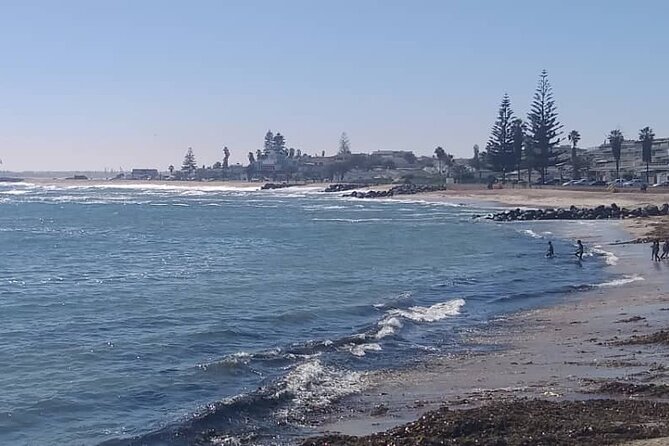
Swakopmund is the first major stop, and the tour allows about an hour around the jetty and Mole. You walk along the waterfront while the guide explains the town’s past as a German colonial settlement.
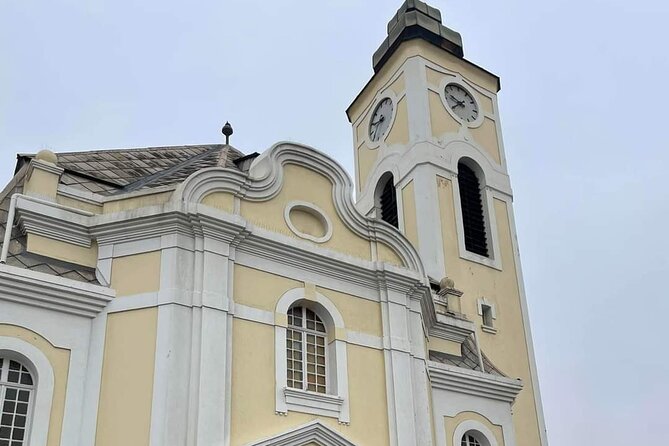
The old buildings are one of the town’s main draws. Swakopmund has a distinct German architectural character, and the walk gives you more than a quick drive past the center. You get a short introduction to how this small coastal resort developed and why it became important in a place where desert and ocean meet.
The jetty itself is a practical first stop. You can stretch your legs after the port transfer, take in the sea air, and begin the day with a real sense of place. The walking portion is not long enough to cover every corner of Swakopmund, but it helps you understand the town before the route turns inland.
After the walk, you drive through town past older hotels and stations. This part is brief, so do not book the excursion expecting a full morning in Swakopmund. The tour’s goal is to connect the town with the desert sites, not to focus on shopping, museums, or extended free time.
The lichen fields on the gravel plains
Beyond Swakopmund, the road changes as you cross the gravel plains of the Namib. The first desert stop is a lichen field, where the guide explains a plant-like organism made through cooperation between a fungus and an algae.
Lichens can look almost too small to notice. That is exactly why a guide matters here. Without an explanation, the plain can seem empty. With context, you start looking for the tiny patches and considering how anything survives with so little rain.
The tour describes lichens as living from fog and limited moisture. Their presence shows that the desert is not lifeless, even when the ground appears bare. This is a good example of the tour’s strongest feature: it turns small, easily missed details into part of the story.
You have about an hour at this stage, including the drive and explanation. The stop will appeal most if you enjoy natural history and unusual adaptations. If your idea of a desert visit is climbing dunes or seeing large animals close up, this may feel quiet.
Moon Landscape Viewpoints and ancient rock
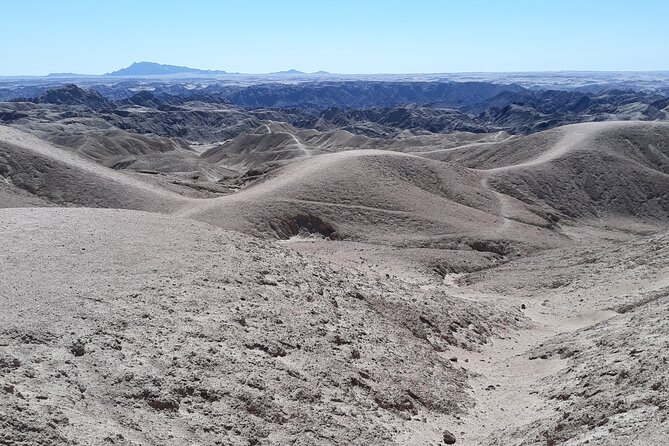
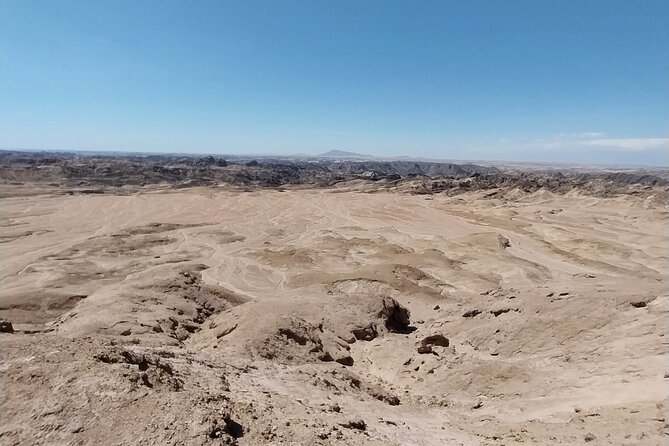
The gravel road continues to several viewpoints over the Moon Landscape. The name is not hard to understand once you see the eroded ground, dry river channels, and broken rock formations.
The tour links the area to periods of lava flow and ice ages. Uranium exploration sites may also be visible, along with the possibility of spotting desert animals such as zebra or springbok. Wildlife sightings are not promised, so treat them as a bonus rather than a reason to book.
You have roughly an hour here. The viewpoints give you a chance to see how severe weather and ancient geological events shaped the area. This is not a lush or colorful setting. Its appeal comes from texture, emptiness, and the sense that the ground has been worked over by forces far older than human settlement.
The drawback is the road itself. The route uses gravel, and the combination of uneven driving and long distances may be tiring. One low-scoring experience specifically objected to the amount of driving and uncomfortable seats. That criticism is fair to consider. The dramatic scenery does not remove the physical reality of spending much of the day in a vehicle.
More Boat Trips in Walvis Bay:
- Mola Mola Marine Dune Experience
★ 5.0 · 87 reviews - Sandwich Harbour Scenic Excursion – Design for the Cruise Ships
★ 5.0 · 57 reviews - Mola Mola Marine Dolphin Cruise from the Walvis Bay Waterfront to Pelican Point
★ 5.0 · 52 reviews - Marine Dolphin Seal Cruise
★ 5.0 · 34 reviews
Goanikontes, an oasis in the dry riverbed
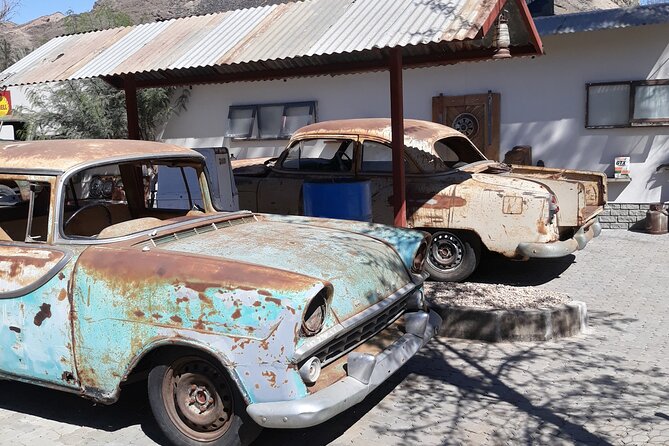
Goanikontes brings a sharp change in mood. This oasis lies in the Swakop River and once served as an important watering place for the area. It was also connected with an old police post and attempts to grow vegetables in the desert.
The stop lasts about an hour and adds useful human context to the natural sights. You are not just looking at dry river channels. You are learning how people moved through this difficult region and where they found enough water to make a settlement possible.
The route passes through the dry riverbed, a reminder that a river does not need to flow regularly to shape life. The oasis helps explain why certain places mattered in the past. In a setting that can look uniformly harsh, a water source changes everything.
This is one of the better stops for anyone interested in the practical side of history. The guide’s explanation connects geography with settlement, policing, food production, and travel. It also breaks up the long open stretches of desert driving.
Welwitschia Plains and the desert’s oldest survivors
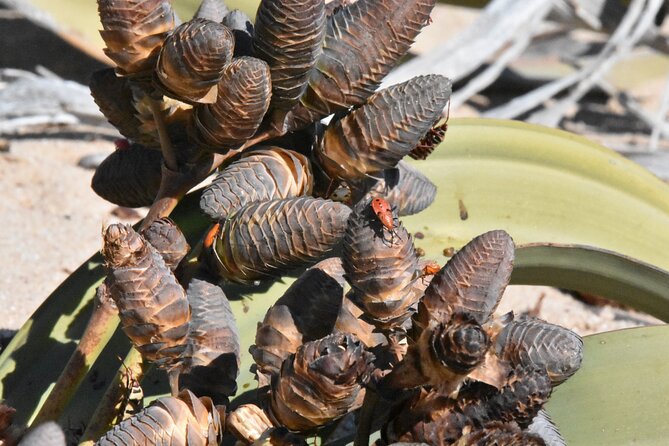
The Welwitschia Plains are the tour’s most unusual natural stop, and the schedule gives them about two hours. That extra time makes sense. Welwitschia plants are easy to pass by if you do not know what you are seeing, but they reward a closer look.
Each plant has no ordinary stem and only two leaves. Those leaves can split and fray over time, creating a broad, untidy shape across the ground. Some plants live for hundreds of years, surviving with fog and very little rain.
The guide explains that there are male and female plants. Small brown and orange insects help pollinate them, while seeds spread on the prevailing winds. This is a compact lesson in desert survival, and it gives the gravel plain a surprising amount of life.
I would treat this as the tour’s best stop for people who enjoy botany, geology, and small natural details. You are unlikely to get the instant drama of a huge dune or a crowded wildlife reserve. Instead, the reward comes from realizing that a plant can endure for centuries in a place that appears unable to support anything.
The two-hour allocation also helps prevent the Welwitschia visit from becoming a rushed photo stop. You have time to listen, look carefully, and take in the scale of the surrounding plain. Still, the route remains exposed and austere, so visitors who need shade or frequent facilities should ask about arrangements before booking. The supplied information does not specify restroom facilities or shade at each stop.
Dune 7, seen rather than climbed
On the return toward Walvis Bay, the route passes Dune 7. The tour allows about an hour at this part of the route, but you do not climb the dune. You only view it before continuing toward the harbor.
That limitation matters. Dune 7 is a recognizable stop, but this excursion is not a dune adventure. There is no stated sandboarding, climbing, or extended time on the sand. If standing on a tall dune is your main goal, you should choose a tour designed around that activity instead.
As a final desert sight, Dune 7 works well. It gives you a different view of the Namib after the dark gravel plains and eroded rock around the Moon Landscape. The contrast helps you see that the desert is not one single type of scenery.
Flamingos at Walvis Bay Lagoon
The final stop is at the flamingos in Walvis Bay Lagoon, with about 15 minutes set aside for viewing. The lagoon is described as supporting more than 750,000 birds across 54 species, including palearctic migrants, pelicans, terns, and cormorants.
Fifteen minutes is short, but the stop is conveniently placed near the end of the return route. It gives you one last look at the coast before returning to the port. Bring your phone or camera ready, since the viewing window is brief.
The birdlife also completes the day’s main theme. You begin near the harbor, travel through a coastal town and a dry interior, then return to a wetland full of birds. That range is the reason this excursion can feel worthwhile despite its long road sections.
How the price compares with the day you get
At $193.68 per person, the cost is not cheap for a seven-and-a-half-hour outing. The value depends on how much you want to cover during one cruise stop.
You are paying for transport across a wide area, a local guide, several included desert access points, and timing designed for a cruise ship. You also avoid having to arrange separate transport to Swakopmund, the Moon Landscape, Goanikontes, the Welwitschia Plains, Dune 7, and the lagoon.
The price makes more sense if you want a broad first look at the region. It makes less sense if you only want Swakopmund, since a shorter city tour should give you more time there and less driving. The operator now offers a Swakopmund city tour, which may suit you better if the town is your priority.
A meal and drinks were included during at least one outing, with a buffet served in the desert. That was described as attractive and tasty, though one person later reported several days of stomach trouble and needed medicine from a doctor. This does not establish the cause, but I would still use normal food and water caution, especially when eating far from town.
Guide quality and group experience
The guide can make or break this particular route. The strongest praise focused on clear local explanations, care during the day, and the ability to adjust arrival times to avoid crowded spots.
Hannes was singled out by name for making the day memorable and informative. The operator, Uwe, also responds directly to customer concerns and explains that the route tries to avoid arriving when large cruise groups are already at a site. That can matter at popular viewpoints, where timing changes the feel of the stop.
The tour is not private. A group of up to 25 is smaller than a large ship bus, but it can still feel social and less flexible than a private vehicle. If you pay for the remaining seats, you can arrange a private outing, according to the supplied details.
German-speaking guides are scarce. You can request one, but it is not guaranteed. During peak season or when a ship releases around 2,000 people into the port, German guides may already be assigned. English-speaking guiding should be expected unless the operator confirms otherwise.
The practical side of a cruise day
The operator says pickup is structured around ship arrival times and that the guide will wait if the ship docks late while people disembark. That is important for a shore excursion, though you should still provide accurate ship and arrival details when booking.
The experience ends back at the same Walvis Bay meeting point. Confirmation is provided at booking, and most people can participate. The supplied information does not give a detailed mobility assessment, so you should ask directly if you need specific vehicle, seating, or walking accommodations.
Free cancellation is available until 24 hours before the start time for a full refund. Changes or cancellations inside that 24-hour window are not accepted, and the local time controls the cutoff.
Who should book this Swakopmund and desert route?
I would recommend it to you if this is your first visit to the Walvis Bay area and you want context as much as scenery. It suits people who enjoy geology, desert plants, local history, and a busy schedule that links many places together.
It is also a strong choice for cruise passengers who want a shore day organized around the ship rather than piecing together several transfers. The guide’s explanations are a major part of the value, especially at the lichen fields, Moon Landscape, Goanikontes, and Welwitschia Plains.
I would hesitate if you dislike long drives, rough gravel roads, or limited time at each sight. You should also skip it if your only priority is climbing a dune, spending half a day in Swakopmund, or taking a relaxed wildlife outing. Those goals call for a more focused tour.
Should you book it?
Book this tour if you want the biggest possible taste of the Walvis Bay and Swakopmund region in one cruise stop. The day covers an impressive range, and the best guides add meaning to places that could otherwise look like empty ground.
Skip it if the thought of several hours on the road outweighs the appeal of seeing many different sites. At this price, the tour needs to match your style. For curious first-time visitors with limited time, it is a strong introduction to Namibia’s coast. For slow sightseers, a shorter Swakopmund outing will likely be the better buy.
FAQ
Where does the tour start and end?
It starts at Walvis Bay Port, at 2FWR+CFH, Unnamed Road, Walvis Bay, Namibia. The tour ends back at the same meeting point.
How long does the experience last?
The tour lasts approximately 7 hours and 30 minutes.
Is pickup available for cruise passengers?
Yes. Pickup times are arranged around the arrival times of the cruise ship. The operator says it will wait if the ship docks late while you disembark.
Is this a private tour?
No. It is a shared tour with a maximum of 25 people. If you want a private vehicle, you must pay for the remaining seats locally and notify the operator when booking.
Is a German-speaking guide guaranteed?
No. German-speaking guides are scarce and are assigned on a first-come, first-served basis. The operator cannot guarantee one during peak periods or when a cruise ship brings a large number of people ashore.
Does the tour include climbing Dune 7?
No. You only view Dune 7. The tour does not include climbing the dune.
Can I cancel for a full refund?
Yes, if you cancel at least 24 hours before the experience starts. Cancellations or changes made less than 24 hours before the start time are not accepted and are not refunded.
Just added in Walvis Bay
- Walvis Bay : Pelican Point Birding and Cape Fur seal tour★ 5.0 · 1 review
- Walvis Bay: Seal Kayaking Adventure with Brunch★ 4.1 · 3 reviews
- Walvis Bay: Half-Day Tour with Dune 7 and Pink Lake★ 4.6 · 11 reviews
- Walvis Bay: Mondesa Township Tour★ 3.7 · 13 reviews
- Wildlife and Landscape Tour- full-day (7hours) from Walvis Bay★ 5.0 · 5 reviews
- Shore Excursion – Flamingos ,Dune7,Welwitschia, Moonlandscape,Oasis,Swakopmund.★ 5.0 · 8 reviews
- Birding Tours in Walvisbay and surrounds★ 5.0 · 1 review
- Walvisbay & Coastal Town City Private Local Guided Day Tour for Cruise Ships★ 3.5 · 11 reviews
Sossusvlei and the Namib Dunes, compared.
7 Day Southern Namibia and Sossusvlei Camping Safari
Read our review →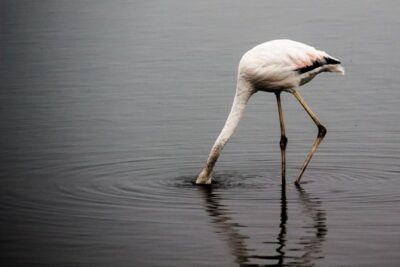
4-Day Swakopmund And Sossusvlei Accommodated Adventure from Windhoek
Read our review →
9 Day Etosha, Skeleton Coast and Sossusvlei Camping and Lodge Safari
Read our review →
3-Day Sossusvlei Express Accommodated Safari from Swakopmund
Read our review →
5-Day Sossusvlei & Sandwich Harbour Photography Tour
Read our review →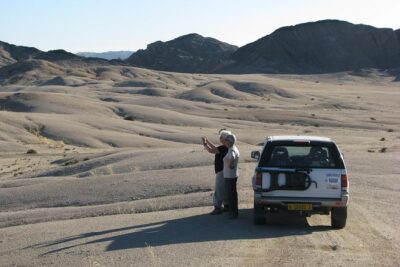
NAMIB DESERT TOURS, Full-Day and Half-Day Tours from Swakopmund, Namibia
Read our review →Browse the lists this tour appears in