
Reviewed · 7-DAY EXPERIENCES
7 Day – Kalahari TOP attractions
Desert days reward patient eyes. This seven-day Namibia circuit links towering Namib dunes, the Atlantic coast, abandoned Kolmanskop, Fish River Canyon, and the red Kalahari in one tightly packed journey from Windhoek. I like the striking variety, from sunrise on Dune 45 to sunset above the canyon, and I like the chance to travel in a small group of no more than 10 people with a professional guide.
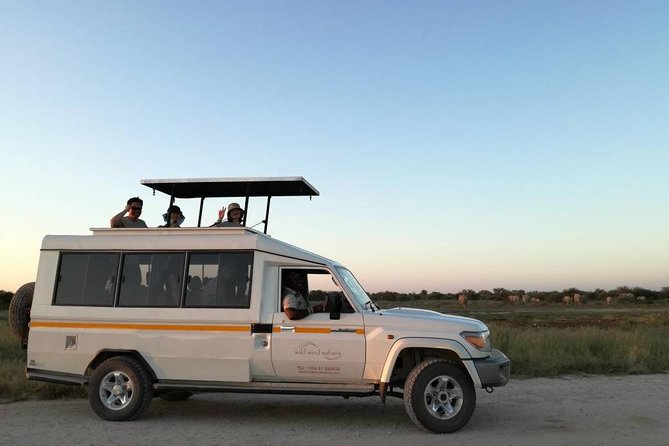
The main tradeoff is simple: you spend many hours on the road. This is a highlights tour, not a slow desert retreat. Still, the air-conditioned 4WD, included meals, bottled water, park fees, and hotel pickup make the long transfers easier to handle. Guides such as Michael and Jephta have been praised for careful organization, safe driving, and warm service.
In This Review
- Key points at a glance
- What this seven-day route really offers
- Windhoek to the Namib Desert
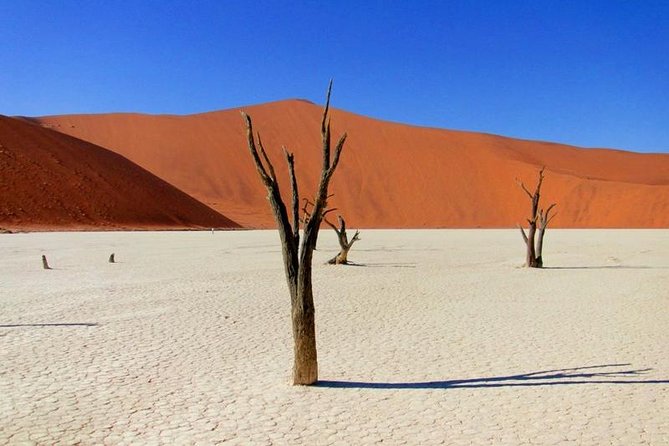
- Sunrise at Dune 45 and the stark beauty of Deadvlei
- Lüderitz, Diaz Cross, and the Atlantic coast
- Kolmanskop, a ghost town in the sand
- Fish River Canyon at sunset
- Quiver Tree Forest and Giant Playground
- Food, lodging, and comfort on the road
- The long drives and the value of guided travel
- Who should book the Kalahari TOP attractions tour?
- Should you book it?
- FAQ
- Where does the tour start and finish?
- How long does the tour last?
- What are the main places visited?
- Are meals included?
- Is bottled water included?
- How many people can join the tour?
- Is a passport required?
- Can dietary requirements be accommodated?
Key points at a glance
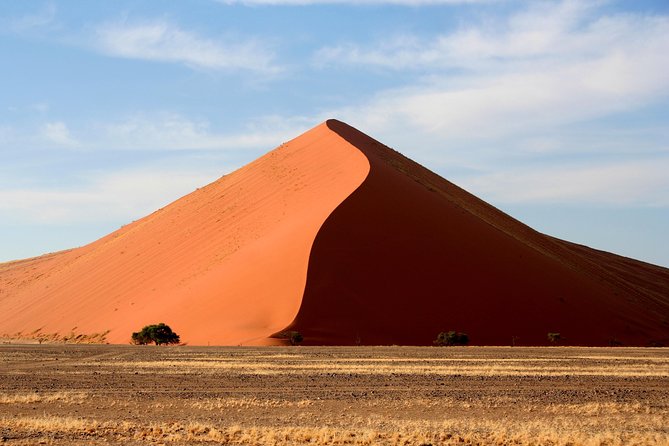
- Dune 45 at sunrise: Climb one of the Namib’s famous red dunes while the early light changes the shape and color of the sand.
- Sossusvlei and Deadvlei: Walk among stark clay pans, dead camel thorn trees, and some of Namibia’s most photographed scenery.
- Lüderitz and Kolmanskop: Combine a short coastal town visit with an atmospheric abandoned diamond-mining settlement.
- Fish River Canyon at sunset: See one of southern Africa’s great natural sights at the best time for warm light and photographs.
- Kalahari geology and plants: Visit the Quiver Tree Forest, Giant Playground, and Mesosaurus Fossil site.
- Small-group road travel: The group is capped at 10, with an air-conditioned four-wheel-drive vehicle and a guide throughout.
What this seven-day route really offers
This is a compact circuit through southern Namibia, built around major sights rather than long stays in one place. You begin in Windhoek and travel through the Namib Desert, the coast near Lüderitz, the canyon country around the south, and the Kalahari before returning to the capital.
I would choose this trip if you want a broad first look at Namibia and care more about scenery, photography, geology, and unusual historic places than classic safari drives. You may see oryx, ostrich, zebra, klipspringer, baboons, jackals, and other wildlife along the route, but the main attraction is the open country itself.
The listed price is $2,185.90 per person. That is a serious sum, but it covers accommodation, meals, fuel surcharge, local taxes, national park fees, bottled water, transport, guide services, and pickup and drop-off. When you add up the driving, park access, lodging, and meals, the package offers useful convenience for anyone who does not want to plan a complicated self-drive route.
More things to do in Windhoek:
- Windhoek: City and Township Tour
★ 4.8 · 430 reviews - Half-Day Windhoek City and Township Cultural Tour
★ 4.5 · 187 reviews - Windhoek: Bushman Walk with the San
★ 4.9 · 145 reviews
Windhoek to the Namib Desert
The trip begins at 8:00 a.m. in Windhoek, Namibia’s capital. Hotel pickup is offered, and the tour ends with a drop-off at the lodge or hotel of your choice in Windhoek.
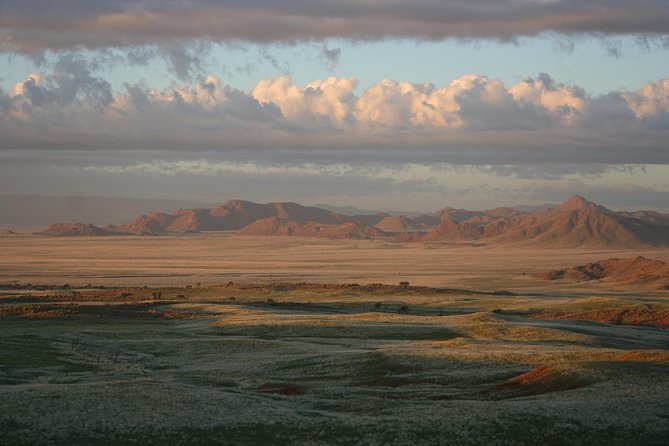
The first road section leads toward the Namib Desert and the spectacular Spreetshoete Pass. This is a good early reminder that Namibia is about the journey as much as the named stops. The pass gives you a broad view over the desert, with a natural pause for panoramic photographs.
Keep your camera ready during the drive. Possible sightings include oryx, ostrich, zebra, klipspringer, baboons, and jackals. These are chances rather than guarantees, so you should not treat this as a dedicated wildlife drive. The open roads and shifting colors are the real show.
An air-conditioned 4WD matters here. Namibia’s distances are large, and the vehicle gives you a more comfortable base during long transfers. A small group also makes it easier to stop for photographs and ask questions without the feel of a large coach tour.
Sunrise at Dune 45 and the stark beauty of Deadvlei
The Sossusvlei section is the emotional center of the trip. You climb Dune 45 at sunrise, when the low light gives the sand strong shadows and a changing range of reds and oranges.
The climb is physically demanding, though the tour information does not give a set walking time or difficulty rating. Sand shifts under your feet, and the slope can feel harder than it looks from below. Take the ascent at your own pace and carry the bottled water provided.
The reward is a wide view across the Namib’s dune country. From the crest, the ridges look almost orderly, yet the wind keeps reshaping them. For photographers, sunrise is the key moment. Light changes quickly, so the best images may come from watching rather than rushing.
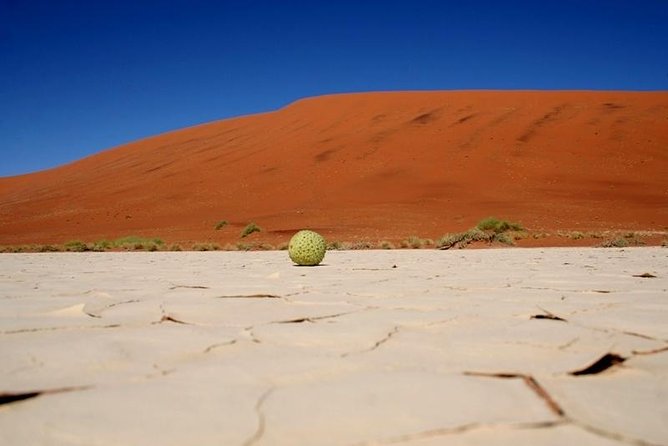
Deadvlei offers a sharp contrast. Here, pale ground, dark dead trees, and orange dunes create an almost graphic scene. The walk is described as spectacular and unforgettable, but you should be ready for exposure to sun and heat. A hat, sun protection, comfortable walking shoes, and spare camera power are sensible choices, even though personal photographic equipment insurance is not included.
This section also explains why the tour is not simply a sightseeing checklist. Sossusvlei asks you to slow down and notice small changes in shadow, texture, and color. It is a place where the quiet is part of the attraction.
Lüderitz, Diaz Cross, and the Atlantic coast
After the desert, the route turns toward Lüderitz. The change is dramatic. You move from huge inland dunes to a coastal town shaped by the Atlantic and Namibia’s colonial-era past.
The program includes Diaz Cross and a short tour of Lüderitz. The cross marks an important point in the history of European sea voyages along the southwest African coast. The town visit is brief, so you should think of it as an introduction rather than a full exploration of every street and building.
The route also includes a visit to the feral horses of the Namib Desert. These animals are one of the region’s distinctive sights, but wildlife sightings are never certain. The stop adds another layer to the trip, showing how life persists in an exceptionally dry part of the country.
Lüderitz is useful as a contrast to Sossusvlei. You are not looking at the same red-dune scenery all week. Instead, the route keeps changing its mood: silent desert, sea air, town streets, and abandoned settlements.
A completely different kind of day:
- 6-Day Dunes and Wildlife Accommodated Safari from Windhoek
★ 5.0 · 123 reviews - Windhoek City Tour
★ 5.0 · 113 reviews - 10-Day Namibia Highlights Guided Tour from Windhoek
★ 5.0 · 78 reviews - 12 Day Classic Namibia Camping Safari
★ 5.0 · 77 reviews
Kolmanskop, a ghost town in the sand
Kolmanskop is one of the most memorable stops because it combines human ambition with the slow work of the desert. Once linked to diamond mining, the settlement is now known as a ghost town, with sand moving through abandoned buildings.
The appeal is visual, but it is not only about taking dramatic photographs. The empty rooms and encroaching sand show how quickly a place built around a valuable resource can lose its purpose. You get a clear sense of the fragility of settlements in harsh environments.
Allow yourself time to look carefully at doorways, walls, and the way sand fills indoor spaces. The site rewards a patient eye more than a hurried dash for the most famous photograph.
Because the tour schedule is packed, the exact time available at Kolmanskop is not stated. If this is one of your main interests, ask the operator how long the visit normally lasts before booking. The same advice applies to anyone carrying substantial camera equipment, since personal equipment insurance is not included.
Fish River Canyon at sunset
The route then heads toward Fish River Canyon, described as the second-largest canyon in the world. The precise ranking is less important than the scale you feel when looking across its vast cuts and layered rock.
Sunset is the right time to arrive. The lowering sun brings out warmer tones and longer shadows, giving you better conditions for photographs than the hard light of midday. The canyon is a place for broad views, but look for smaller details too: edges, rock bands, and changing color as the light fades.
This stop is also a welcome change of pace after the long road sections. You can enjoy the view, take photographs, and return to the lodge for an evening meal. Accommodation and meals are included according to the itinerary, though individual lodge names are not provided.
One of the strongest features of this tour is the pairing of Fish River Canyon with Sossusvlei. The two sites are both grand, but they feel completely different. One is shaped by rock and erosion, the other by wind and sand. Seeing both in a week gives the route real variety.
Quiver Tree Forest and Giant Playground
The final part of the circuit crosses the Kalahari region and includes the Quiver Tree Forest, Giant Playground, and Mesosaurus Fossil site. These are smaller-scale stops than Sossusvlei or Fish River Canyon, but they add texture to the trip.
The Quiver Tree Forest is known for its unusual aloe trees, whose raised branches create striking silhouettes against the sky. The name comes from the traditional use of the hollow branches as quivers. It is especially suited to photographers who enjoy shapes, shadows, and sunset color.
Giant Playground refers to a jumble of large dolerite rocks. The site gives you a close look at the forces that shaped the area, rather than only a distant panorama. It is a useful reminder that Namibia’s appeal is not limited to famous viewpoints.
The Mesosaurus Fossil site adds a very different subject: ancient life and geology. You move from living desert plants to evidence preserved in stone. These stops make the final days feel less like a return drive and more like a continuation of the route’s natural story.
Evenings at the lodges are presented as time for rest and African sunsets. That downtime matters. After a full day on the road, you may appreciate a meal, a quiet view, and a chance to sort photographs more than another scheduled activity.
Food, lodging, and comfort on the road
Accommodation is included, along with breakfast, lunch, and dinner as specified by the itinerary. Drinks are not included, and alcoholic drinks can be purchased separately. If you follow a vegetarian diet or have other dietary needs, tell the operator when you book.
The food receives especially warm praise, with one account describing the meals and accommodation as incredible. That is important on a route with long driving days. You are not only paying for access to sights, but also for the practical support that keeps the week moving.
The vehicle is air-conditioned, a major comfort in desert country. Bottled water is included, but I would still pack a reusable bottle, sun protection, light clothing, and a small day bag for walks and viewpoints.
The group size is limited to 10 people. That is large enough to share the cost of a guided route while remaining small enough for a more personal atmosphere. The guide is central to the experience. Michael has been praised for professionalism and organization, while Jephta Kapuenene has been singled out for safe driving and strong service. Other positive accounts name Rolencia and KK, showing that the company has several guides who have made a good impression.
The long drives and the value of guided travel
You need to be comfortable with road time. This itinerary covers a large part of southern Namibia in only seven days, so the schedule cannot linger at every stop. If you want lazy mornings, long hikes, or several nights in one lodge, this is not the right format.
For me, the guided approach makes sense when you are unfamiliar with Namibia or do not want to manage desert roads, park fees, lodging, meals, and route planning yourself. A guide also gives you someone to help with timing, wildlife sightings, viewpoints, and the practical details of moving between remote areas.
The tradeoff is less independence. You follow a planned route and should not expect to redesign every day around your own interests. The information says the tour is flexible in spirit through guide support, but it does not promise a fully private or custom itinerary.
Most people can participate, and the tour is near public transportation for access to the starting point. A current passport is required on the day of travel, and passport name, number, expiry date, and issuing country are needed for every participant when booking. Confirmation is sent within 48 hours, subject to availability.
The child rate applies only when a child shares with two paying adults. The tour is non-refundable and cannot be changed after booking, so check your dates, insurance, and passport details carefully before paying.
Who should book the Kalahari TOP attractions tour?
I would choose this trip if you want Namibia’s biggest scenic highlights in a single week and you enjoy photography, geology, desert scenery, and unusual historic sites. It also suits anyone who prefers a guide and included meals over the work of arranging a self-drive holiday.
I would hesitate if your main goal is a traditional safari with repeated game drives. Wildlife may appear on the route, but this tour focuses more strongly on dunes, canyon views, coastal history, fossils, rock formations, and desert plants.
The $2,185.90 price is easiest to justify if you value convenience and a structured route. You receive transport, accommodation, meals, park fees, water, guide service, and transfers, all while covering several widely separated parts of Namibia. The cost is harder to justify if you want to travel slowly or are happy handling every detail yourself.
Should you book it?
Book this tour if you want a concentrated dose of southern Namibia without taking on the driving and planning yourself. The combination of Dune 45, Deadvlei, Lüderitz, Kolmanskop, Fish River Canyon, and the Kalahari sites is genuinely strong.
Before you commit, ask about the exact accommodation, daily driving times, and how long you will have at each major stop. If you accept the road time and prepare for early starts, this is a practical, photograph-friendly way to see an extraordinary part of Namibia in seven days.
FAQ
Where does the tour start and finish?
The tour starts in Windhoek at 8:00 a.m. Hotel pickup is offered. At the end, the guide drops you at the lodge or hotel of your choice in Windhoek.
How long does the tour last?
The tour lasts approximately seven days.
What are the main places visited?
The route includes the Namib Desert, Spreetshoete Pass, Sossusvlei, Dune 45, Deadvlei, Lüderitz, Diaz Cross, the feral horses of the Namib Desert, Kolmanskop, Fish River Canyon, the Quiver Tree Forest, Giant Playground, and the Mesosaurus Fossil site.
Are meals included?
Yes. Breakfast, lunch, and dinner are included according to the itinerary. Drinks and alcoholic drinks are not included, although alcoholic drinks are available for purchase.
Is bottled water included?
Yes. Bottled water is included in the tour price.
How many people can join the tour?
The maximum group size is 10 participants.
Is a passport required?
Yes. You need a current valid passport on the day of travel. Passport name, number, expiry date, and country are required for all participants when booking.
Can dietary requirements be accommodated?
Vegetarian meals are available. You should advise the operator of vegetarian needs or other dietary requirements when booking.
Just added in Windhoek
- Windhoek: Katutura Township Tour with Local Guide★ 3.5 · 3 reviews
- Windhoek: City & Township tour. Vehicle, guide, kapana★ 4.2 · 4 reviews
- Windhoek: Dustenbrook Scenic Game Drive★ 5.0 · 1 review
- Windhoek: Okapuka Game Ranch Guided Tour★ 5.0 · 2 reviews
- Windhoek : Cheetah walk Experience★ 4.6 · 8 reviews
- Windhoek City and Township Tour★ 5.0 · 1 review
- 10-Day Private Yoga Adventure in Namibia★ 5.0 · 7 reviews
- Namibia Express Safari – 6 Days★ 5.0 · 1 review
7-Day Experiences, compared.
7 Day Southern Namibia and Sossusvlei Camping Safari
Read our review →
7 Day Northern Namibia and Skeleton Coast Camping Safari
Read our review →
7 Days-Desert adventure, Swakopmund & Etosha Lodging Tour
Read our review →Browse the lists this tour appears in